.svg)
Stadia Concert Traffic Management: Sub-2-Minute Signal Bagging at a Live Level Crossing
CoverMe bagged a live traffic signal at a rail level crossing in under 2 minutes during a stadium event.
Challenge
A major stadia concert brought thousands of fans through a congested residential corridor, with a live railway level crossing sitting directly on the route. The event transport plan needed to close a road temporarily while crowds dispersed, but every extra minute of closure meant more disruption to residents and a higher cost to the event organiser.
The complication: the traffic signal controlling the junction sat on the same corridor as the level crossing. Taking it out of service to manage pedestrian flow could not be allowed to interfere with the crossing's own signal interlock, which has to stay live at all times for rail safety. The team needed a way to decommission the road signal quickly, safely, and without touching the crossing's separate safety-critical equipment, then bring it back into service just as fast once the crowd had cleared.
Traditional bagging off, using a ladder to reach the signal head at 2.5 to 3 metres, was not a realistic option in this environment. Ladder access at a live roadside, next to a moving crowd and an operational railway interface, adds risk for the operative and slows the one thing the plan couldn't afford to lose: time.
Solution
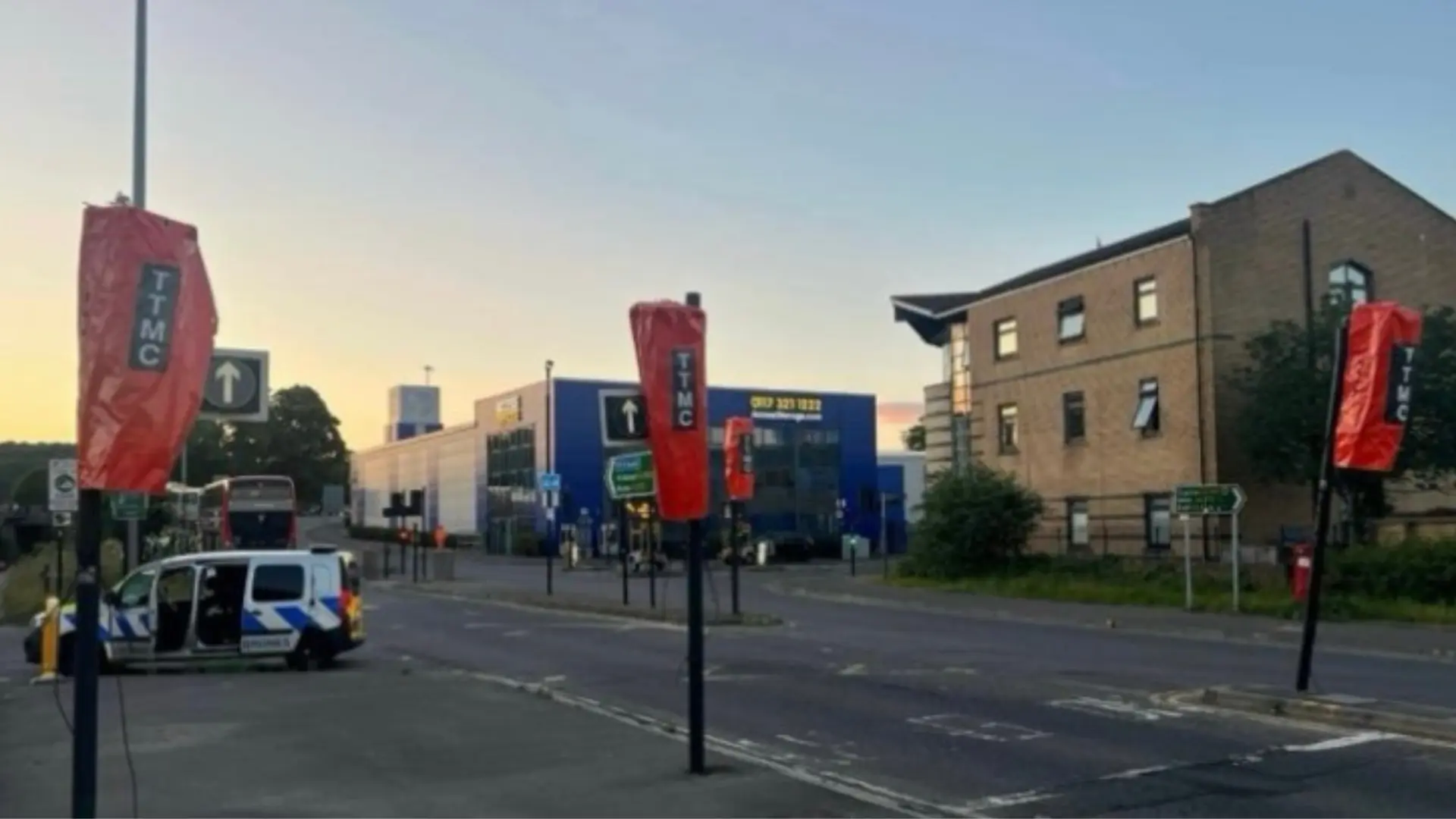
Andrew McQuillan BA FdA CTRM UDip and Sophie Merivale specified CoverMe, IRSS UK's ground-level, no ladders required bagging off system, for the signal head on the corridor. The pole and bag system reaches the signal from ground level, so the crew could take it out of service and put it back into service without a single ladder going up at the roadside.
In practice, that meant: the road traffic signal was bagged and taken out of service in under two minutes. The level crossing's own signal aspect remained live and unaffected throughout, because CoverMe only interacts with the road signal head, not the crossing interlock. The operative worked entirely from ground level, next to moving crowds, without the exposure that ladder access would have created. The signal was unbagged and back in service just as quickly once the road reopened.
Results and Client Testimonial
Three measurable wins came out of the deployment.
Unmatched speed. Signals bagged and unbagged in seconds rather than minutes, keeping the road closure window to an absolute minimum.
Reduced disruption. Traffic impact in the surrounding residential streets was minimised, because the closure only ran as long as it needed to.
Cost savings. A shorter, tightly controlled closure avoided the cost of a longer, more disruptive road closure for the event organiser.
"This could not have been achieved in any other way. When a major event transport plan involves thousands of fans, congested residential areas, and a high-stakes railway level crossing, there is zero room for error."
— Andrew McQuillan BA FdA CTRM UDip
"Without the speed of this solution, the delivery of the transport plan would have been longer, more disruptive, and more costly. Safety, speed, and efficiency, all without ever leaving the ground."
— Sophie Merivale of The Traffic Management Company
Call to Action
Running a transport plan with signal closures near a level crossing, a rail interface, or a high-footfall event corridor? See how CoverMe removes ladder access from the process. Request a demo or view the CoverMe Traffic Signal range.