.svg)
Bagging off a Belisha beacon sounds straightforward, until the beacon is a mid-post design, your traditional cover no longer fits, and updated ARTSM guidance has changed what compliant bagging off looks like. This guide covers everything UK highways contractors and councils need to know: the legal requirements, the difference between old-style and mid-post beacon designs, why traditional methods fall short, and how the CoverMe system from IRSS UK provides a fully compliant ground-level solution for both.
What Is a Belisha Beacon and Why Does Bagging Off Matter?
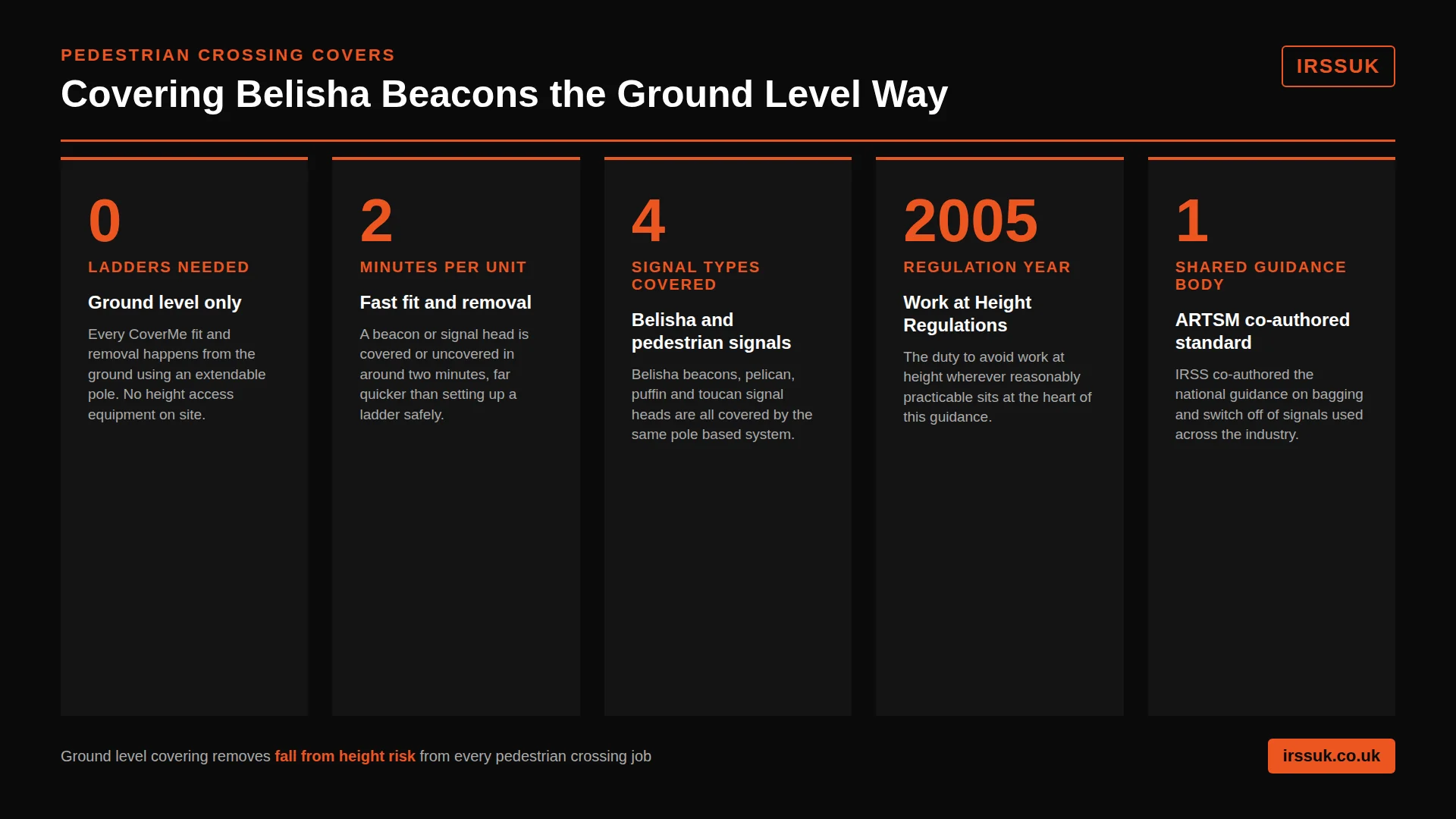
Belisha beacons have marked pedestrian zebra crossings on UK roads since 1934, named after Minister of Transport Leslie Hore-Belisha who introduced them following the Road Traffic Act. To be legally compliant in the UK, every zebra crossing must be equipped with two Belisha beacons, one on each side of the road. When roadworks or maintenance require a crossing to be taken out of service, the beacons must be covered to avoid misleading pedestrians and drivers.
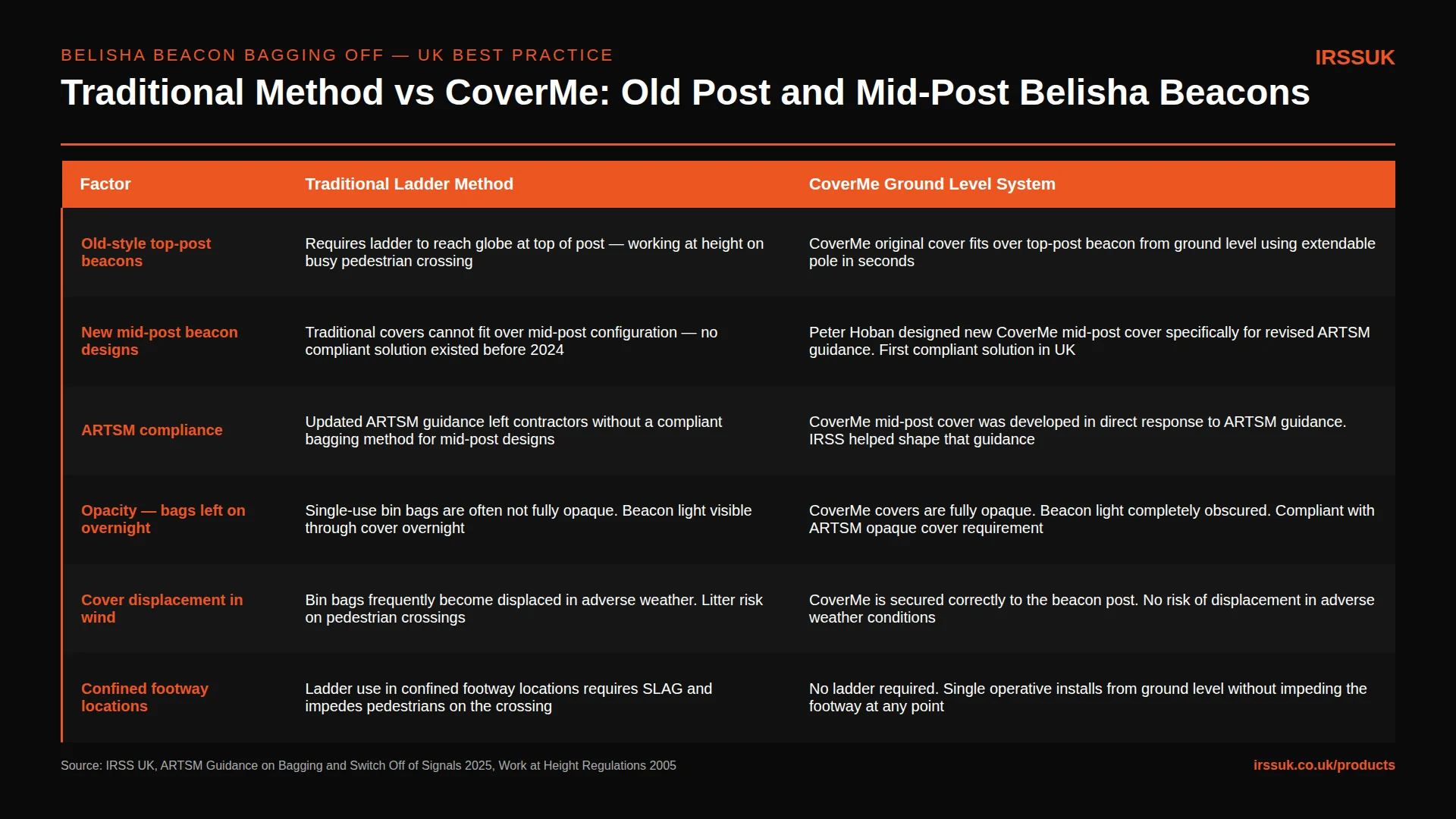
The ARTSM Guidance on Bagging and Switch Off of Signals is clear on this point: bags must be sufficiently opaque so that signal lights cannot be seen through them, and tactile indicators should also be covered where they are not in use so that visually impaired pedestrians are not misled. Single use bin bags, the traditional go to solution, fail on both counts. They are often not fully opaque, and they become displaced in adverse weather, creating a litter hazard on busy pedestrian crossings.
The Two Types of Belisha Beacon: Top-Post and Mid-Post
For most of their history, Belisha beacons followed a simple design: a flashing amber globe mounted at the top of a black and white striped post. Bagging off a top-post beacon traditionally meant climbing a ladder to reach the globe, working at height on a live pedestrian crossing, often in a confined footway location, with passing pedestrians and traffic creating additional risk.
In recent years, mid-post Belisha beacon designs have become increasingly common across the UK. In these designs, the beacon globe is mounted partway down the post rather than at the top, often integrated with a lighting column or clamp-on mounting. The spread of mid-post designs created a new compliance problem: traditional Belisha beacon covers, designed for top-post installations, could not be fitted over the mid post configuration. Contractors were left without a compliant ground-level bagging-off solution for a design that was rapidly becoming standard.
What the Updated ARTSM Guidance Means for Contractors
ARTSM guidance requires that bags must be sufficiently opaque so that signal lights cannot be seen through them, and that tactile indicators should also be covered or removed when they are not in use so that visually impaired and deaf people are not misled. For mid-post beacon designs, this requirement created a practical problem that the industry had no ready answer for, until Peter Hoban of IRSS UK responded to the challenge.
IRSS UK has worked directly with ARTSM in shaping best practice guidance for bagging-off operations across the UK. That relationship meant Peter Hoban was aware of the mid-post compliance gap early, and was able to develop a solution before the issue became widespread across the contractor base.
How Peter Hoban Designed the Mid-Post CoverMe Belisha Beacon Cover
Peter Hoban, inventor and founder of IRSS UK, has spent 25 years in the highways industry. His approach to product development is consistent: identify a specific gap in what the industry can do safely and compliantly, then design a ground-level solution that eliminates the risk. When the mid-post Belisha beacon compliance gap became clear, Peter designed a completely new CoverMe Belisha Beacon Cover specifically for mid-post installations.
The new design maintains the core principles of the original CoverMe range: ground-level installation using an extendable pole, no ladders required, a single operative from the wider highways pool, and full opacity to meet ARTSM requirements. The result is the only purpose-built mid-post Belisha beacon cover currently available to UK contractors, and it has since been supplied to Waterman Aspen, Route 1 Traffic Management, and Clancy, helping all three remain compliant with current ARTSM guidance.
The CoverMe Belisha Beacon Cover range has also been used by Hatton Traffic Management on the HS2 project, replacing single-use bin bags that were not fully opaque when beacons were left on overnight.
The CoverMe Belisha Beacon Cover System
IRSS UK now offers CoverMe Belisha Beacon Covers for both top-post and mid-post beacon designs. Both are installed from ground level using the CoverMe extendable pole system, by a single operative without ladder training or SLAG. This is particularly valuable in confined footway locations where ladder use would impede pedestrians or require specialist access equipment.
Key features of both covers include full opacity, the beacon globe light cannot be seen through the cover at any time, including overnight, reusable construction from recyclable materials, and the option to add bespoke branding and hazard information to each cover. Unlike single-use bin bags, CoverMe Belisha Beacon Covers are designed to be reused across multiple schemes, reducing single-use plastic waste on every deployment.
Common Questions About Bagging Off Belisha Beacons
Does CoverMe work with mid-post Belisha beacon designs?
Yes. Peter Hoban designed a completely new CoverMe Belisha Beacon Cover specifically for mid-post installations following updated ARTSM guidance. Where the beacon globe sits partway down the post rather than at the top, the new design maintains the no-ladders-required approach while adapting to the revised post configuration, keeping contractors compliant with current ARTSM best practice.
What does ARTSM guidance say about covering Belisha beacons?
ARTSM guidance requires that covers must be sufficiently opaque so that the beacon light cannot be seen through them. This requirement applies at all times including overnight, and is particularly important where beacons are left covered while adjacent signals are in operation. Single-use bin bags frequently fail this opacity test. CoverMe Belisha Beacon Covers are fully opaque and meet ARTSM requirements.
Do I need ladder training to install CoverMe Belisha Beacon Covers?
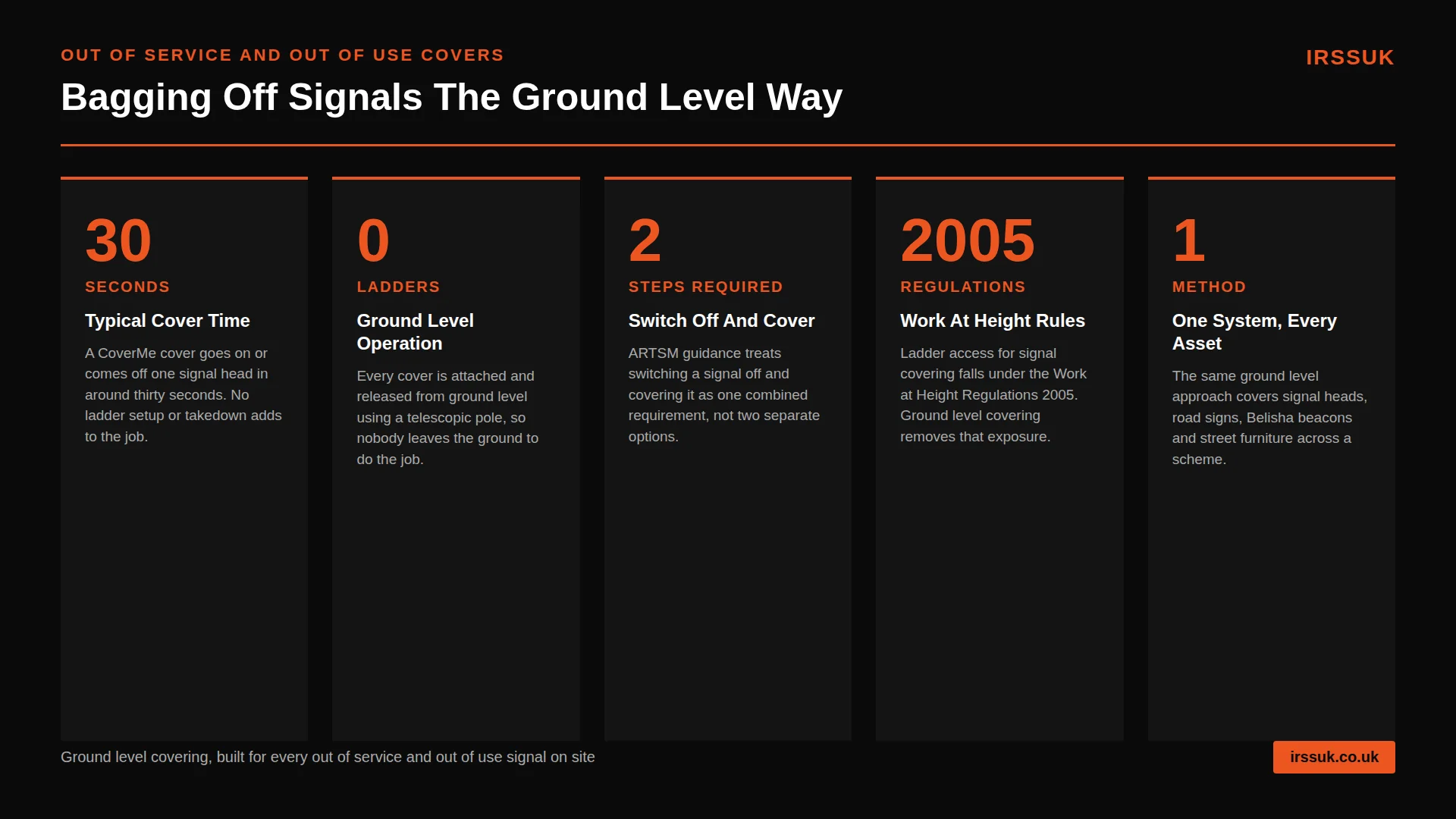
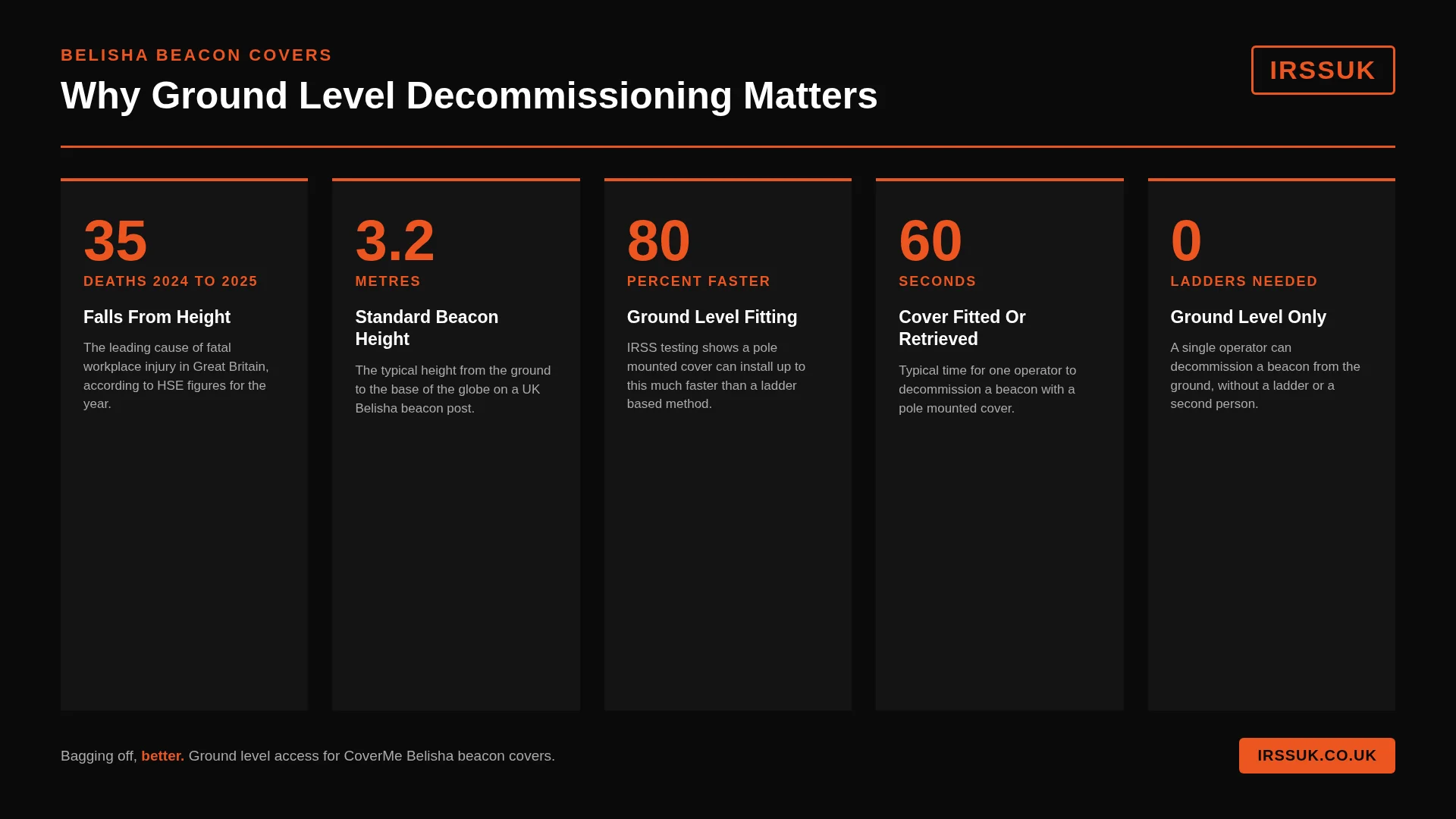
No. CoverMe Belisha Beacon Covers are installed entirely from ground level using an extendable pole, meaning operatives from the wider highways pool can be used without specialist ladder training. This also makes installation faster and safer in confined footway locations where ladders would impede pedestrians or require SLAG.
Are CoverMe Belisha Beacon Covers compliant with the Work at Height Regulations 2005?
Yes. CoverMe Belisha Beacon Covers are designed to eliminate the need for ladder access during bagging-off operations, directly addressing the requirements of the Work at Height Regulations 2005. By removing the need to work at height entirely, contractors and local authorities significantly reduce their duty of care liability on live road schemes.
Which contractors are currently using CoverMe for mid-post Belisha beacons?
CoverMe mid-post Belisha Beacon Covers have been supplied to Waterman Aspen, Route 1 Traffic Management, and Clancy. The product has also been used by Hatton Traffic Management on the HS2 project as a sustainable, fully opaque alternative to single-use bin bags.
The Ground-Level Solution for UK Contractors and Councils
CoverMe Belisha Beacon Covers, for both top-post and mid-post designs, are the only purpose-built, reusable, ground-level solution for bagging off Belisha beacons in the UK. Developed by Peter Hoban of IRSS UK in direct response to updated ARTSM guidance, they are now trusted by some of the UK's leading highways contractors for compliant beacon bagging on road and rail schemes.
To find out more, request a free sample, or discuss a bespoke solution for your beacon stock, visit the CoverMe Belisha Beacon Covers page or contact IRSS UK directly.
Browse the wider CoverMe range, covering signals, signs and street furniture too, on the IRSS UK products page.