.svg)
"Out of service" and "out of use" traffic signals mean the same thing to a driver approaching them: the light cannot be trusted. Whichever term a contractor or local authority uses, current UK guidance is clear that the signal must be switched off and physically covered, not simply left dark. IRSS UK's CoverMe system is built specifically to meet that requirement from ground level, without a ladder.
What "Out of Service" and "Out of Use" Actually Mean
The two phrases are used slightly differently across highways teams, though the safety requirement behind them is identical. "Out of service" is the term most contractors reach for when a signal is temporarily disabled during roadworks, planned maintenance, or a fault, and will come back online once the work is finished. "Out of use" more often describes a signal that has been decommissioned, is awaiting commissioning, or is otherwise not part of the current traffic control scheme at all.
Operationally, that distinction doesn't change what needs to happen next. A road user cannot tell the difference between a signal that is temporarily out of service and one that is permanently out of use, both look the same from a vehicle or a crossing point. Industry guidance therefore treats them the same way: if a signal head isn't controlling traffic, it must not be visible as if it were.
What UK Guidance Requires
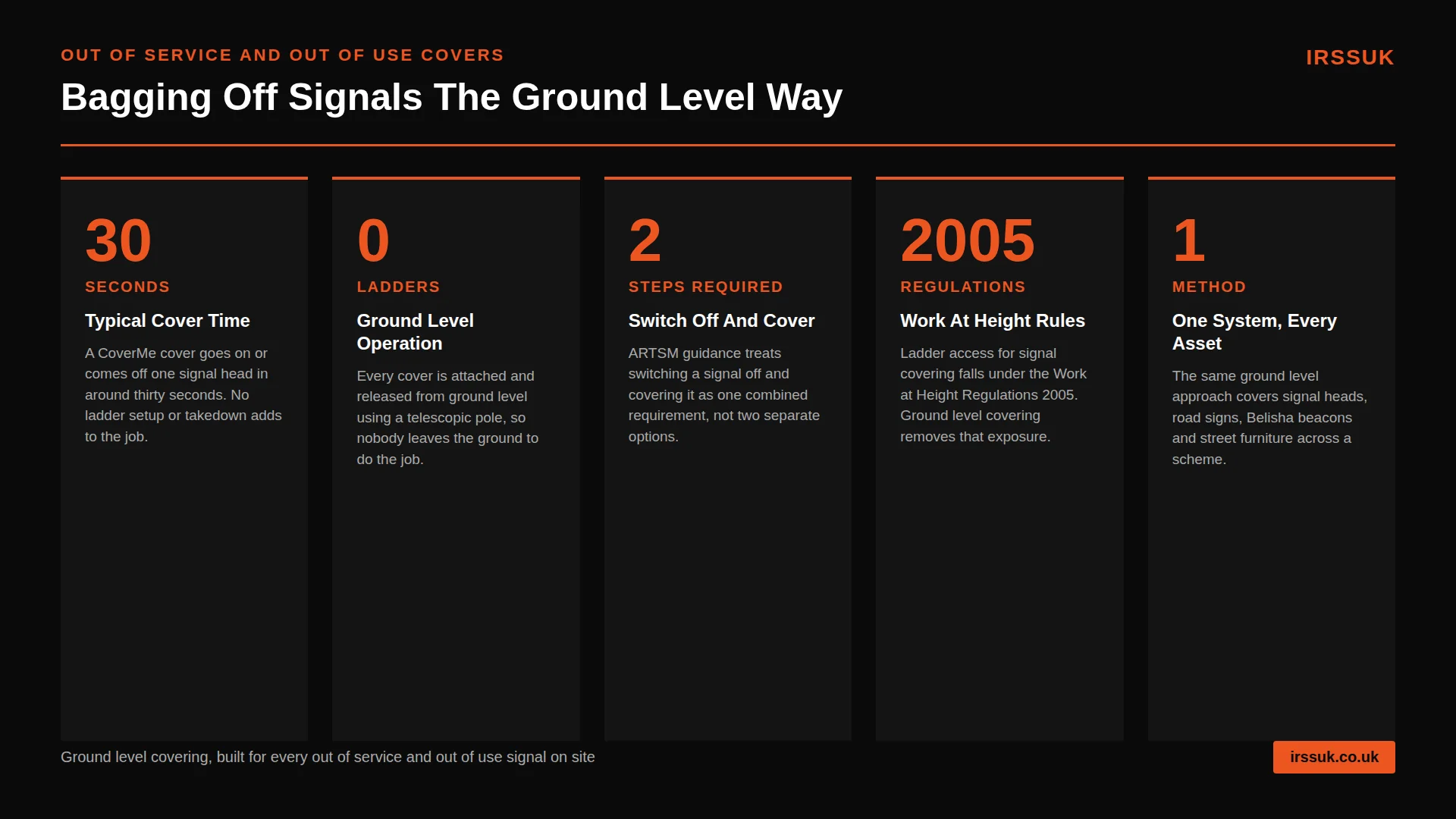
The clearest current reference for this is the ARTSM Guidance on Bagging and Switch Off of Signals, which sets out the practice most highway authorities now expect contractors to follow. Two requirements sit at the centre of it: the permanent signalling equipment must be switched off, and it must be covered. Neither step is treated as optional or interchangeable with the other.
The guidance is specific about why both matter. Tactile rotating cones can keep operating even when the signal lights themselves are switched off, which it flags as a significant risk to vulnerable pedestrians if left running. It also warns that signal lights can still be seen through a bag in low light, which is why switching off comes first, a covered but still-illuminated signal can confuse drivers and pedestrians in exactly the situation the cover was meant to prevent. More recently, the guidance has started flagging Bluetooth-connected signal equipment as a risk too, since it can still be detected by nearby apps even when physically bagged.
This sits alongside the broader framework in the Traffic Signs Manual (Chapter 8), which governs how temporary and out-of-service signs and signals must be presented to road users during works.
How CoverMe Applies Covers Without a Ladder
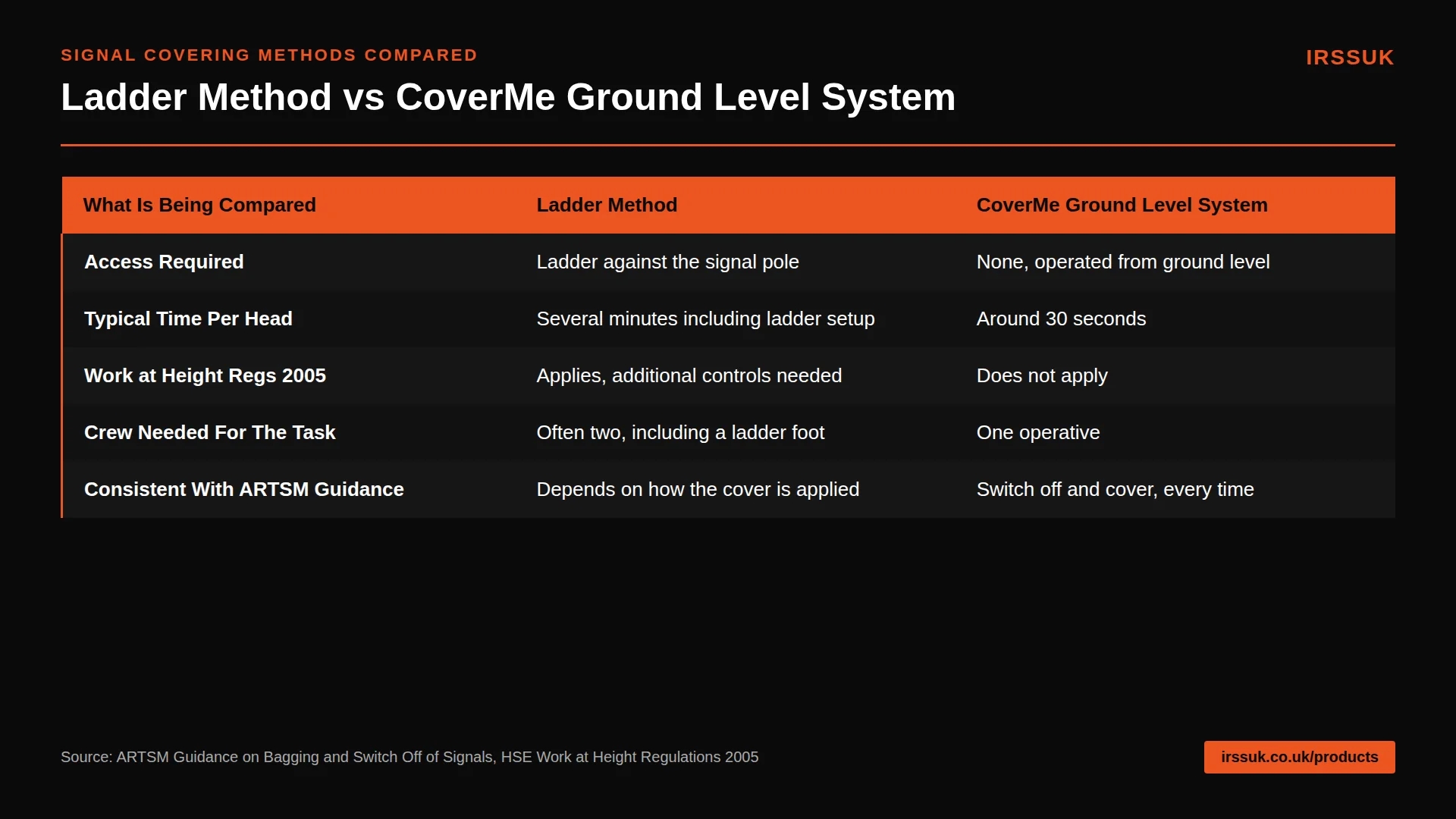
The practical problem most crews run into is access. Signal heads sit well above head height, and the traditional way to bag one off is a ladder, which brings the job under the Work at Height Regulations 2005 and adds a second, avoidable risk on top of the traffic risk the cover is meant to manage.
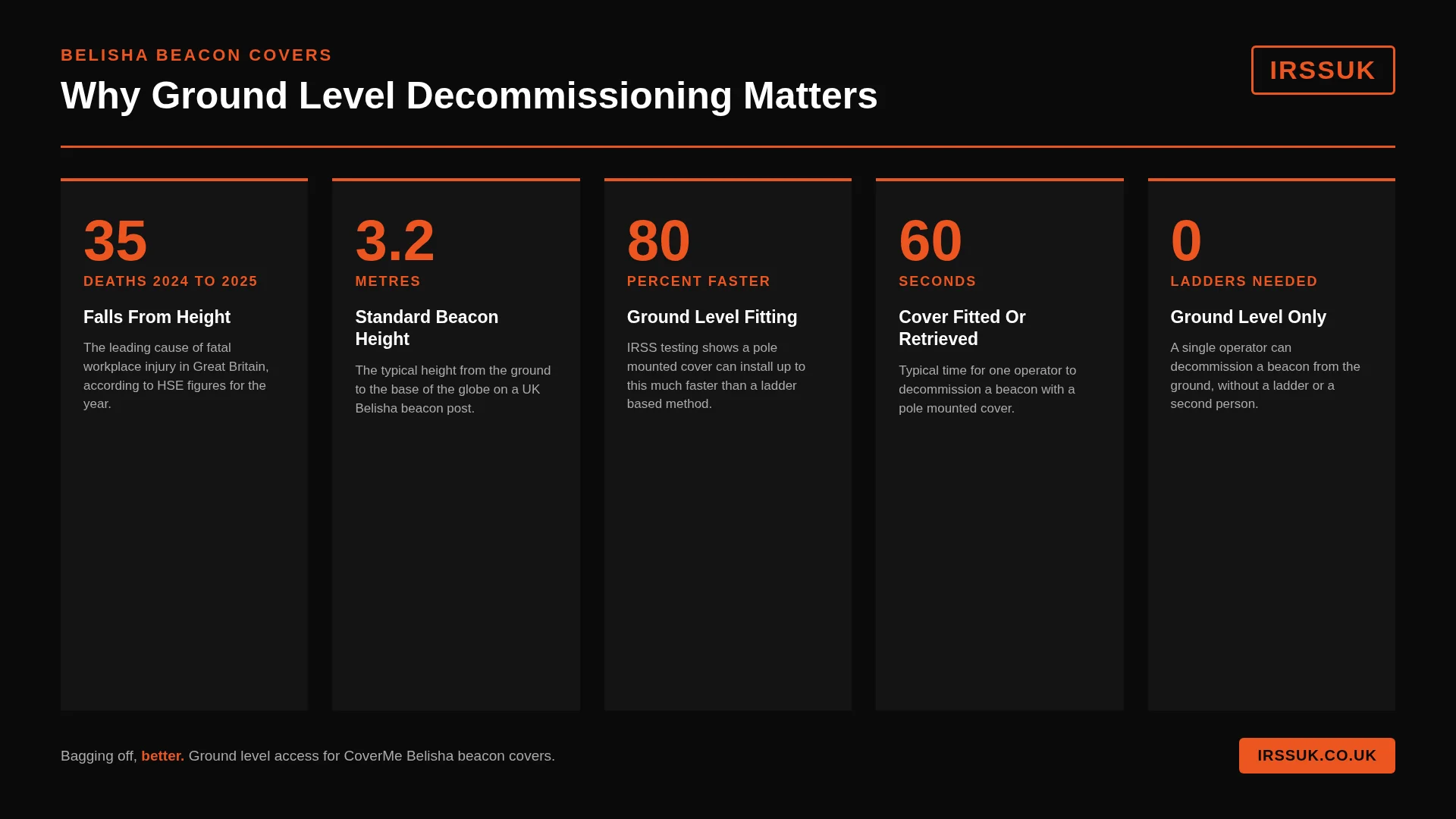
IRSS UK's CoverMe traffic light covers are designed to remove that step entirely. The system attaches and releases from ground level using a telescopic pole, so an operative never needs to leave the ground to cover or uncover a signal head, typically in under 30 seconds per head. That means a crew can switch a signal out of service, cover it correctly per current guidance, and move on, without a ladder, a second person for a ladder-foot, or a separate access risk assessment for that step of the job. The same ground-level approach extends across IRSS UK's wider range of covers for road signs, Belisha beacons and street furniture, for teams who need one consistent method across every asset on a scheme rather than a different tool for each one.
Common Questions
Why are some traffic lights covered?
A traffic light is covered, or "bagged off," when it is switched off and not controlling traffic, usually during roadworks, maintenance, or before it's been commissioned. The cover stops road users mistaking a dead signal for a working one.
What do you call a traffic light in a blanket?
Informally, "a traffic light in a blanket", but the correct industry term is a bagged, or covered, out-of-service signal. It's the same process whether the signal is described as out of service or out of use.
Is it a legal requirement to cover an out-of-service traffic signal?
Current UK industry guidance, including ARTSM's guidance on bagging and switch-off, treats covering as required practice alongside switching the signal off, not an optional extra. Highway authorities generally expect contractors to follow it as a condition of working on their network.
What's the difference between out of service and out of use signals?
"Out of service" usually means temporarily disabled during works or a fault; "out of use" usually means decommissioned or not yet commissioned. Both must be switched off and covered in the same way, since road users can't tell the two apart.
Why Getting This Right Matters
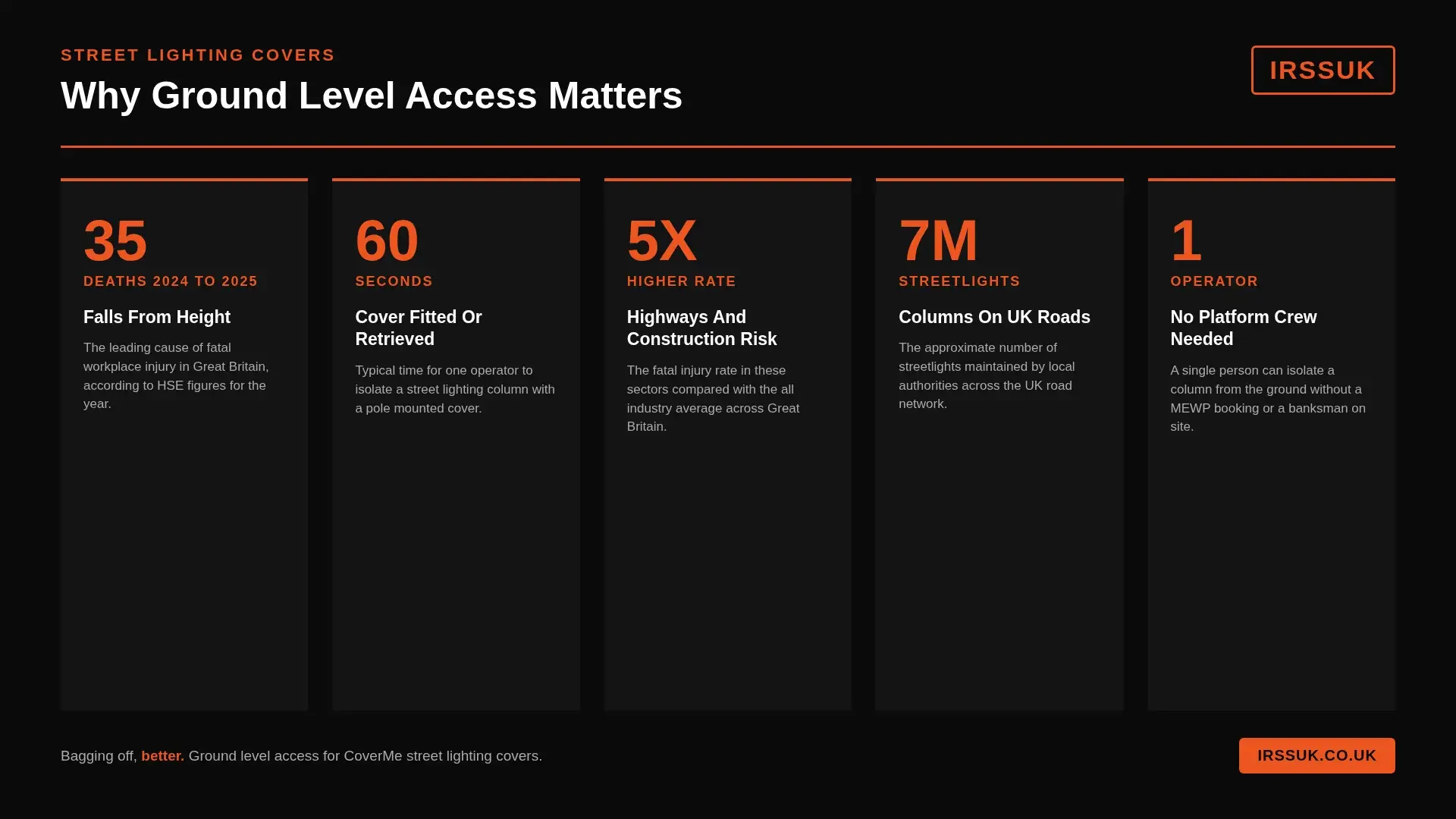
Falls from height remain one of the most common causes of serious injury on UK worksites, and the Health and Safety Executive is explicit that a ladder should only be used when a lower-risk method genuinely isn't practical. Bagging off from ground level removes that judgement call for signal covering entirely. It also cuts setup time on a scheme where every additional minute of lane closure carries its own cost and risk, and it keeps the cover itself consistent with current guidance, rather than depending on how comfortable an individual operative is on a ladder that day.
The Takeaway
"Out of service" and "out of use" describe slightly different situations, but the requirement is the same either way: switch off, then cover, using a method that road users can rely on and a crew can carry out safely. Get in touch with IRSS UK to see how CoverMe covers a full signal scheme from ground level, or view the full range on the products page.