To reduce noise on roadworks sites, control the works noise at source and fix the rattling manhole covers left behind. Construction noise is managed through local authority consent and agreed working methods. Clanking covers are cured by closing the gap between cover and frame. IRSS UK, the UK distributor of Noise-Stop®, supplies a patented soundproofing system designed for exactly that job.
Where Roadworks Noise Comes From
Roadworks noise has two separate sources. Treating them as one problem is why complaints keep coming back.
The first is the work itself. Plant, breakers, generators and deliveries all make noise while the site is active. The second is the road after the work. Covers that have tilted or worn in their frames clank every time a vehicle passes over them.
Residents notice both. The second source can last for years, long after the site has been cleared. That is why it deserves attention in the planning stage, not only after the complaints arrive.
UK Rules on Construction Noise
Under section 61 of the Control of Pollution Act 1974, a contractor can apply to the local authority for prior consent for noisy construction work. The application describes the works, the method, and the steps proposed to minimise noise.
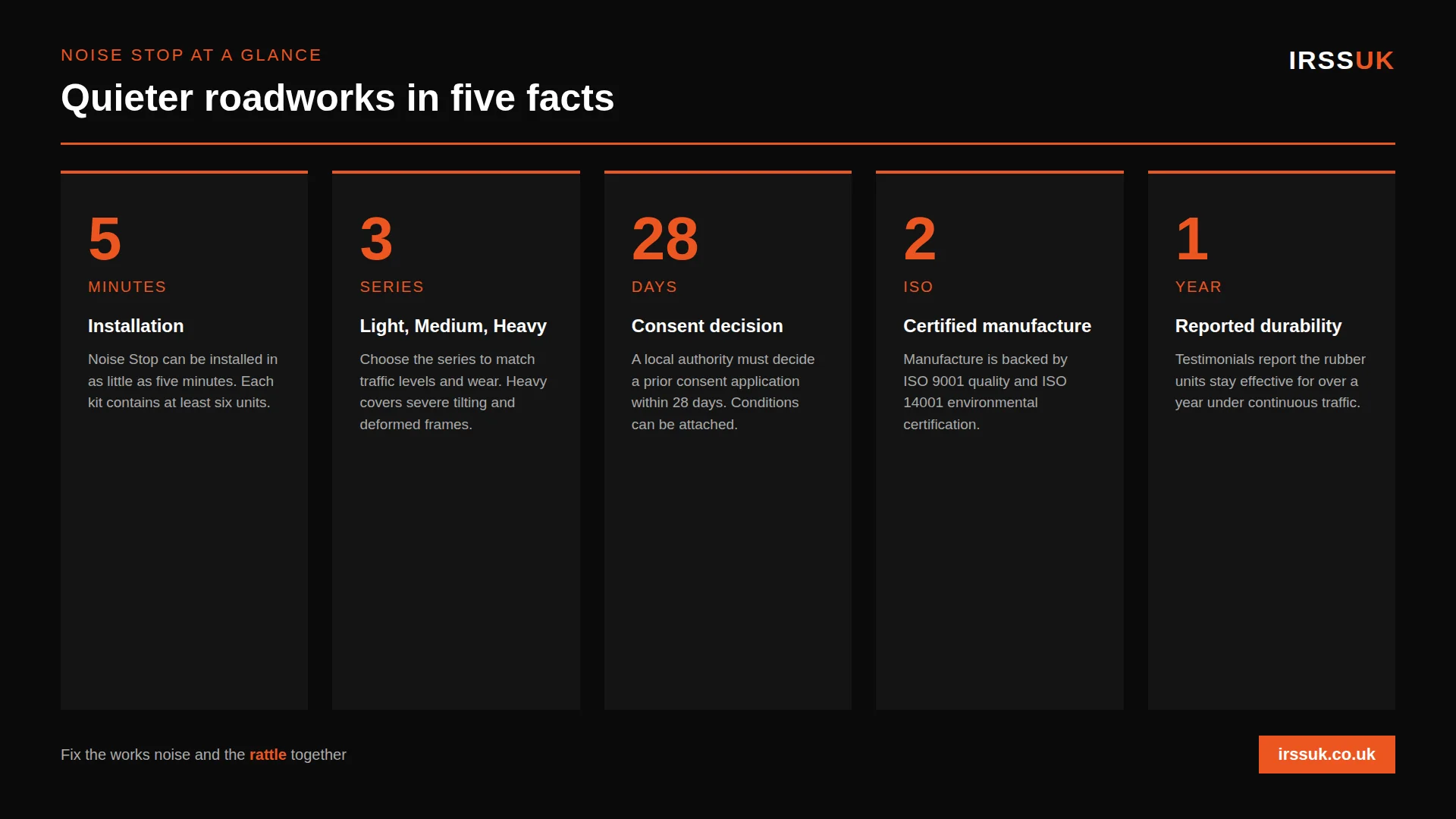
The authority must decide within 28 days. It can attach conditions or limit the duration of the consent. If it refuses, or sets conditions the applicant disagrees with, the applicant can appeal to a magistrates' court within 21 days.
Many contractors also work to BS 5228-1, the code of practice for noise control on construction and open sites. These routes govern the works. They do not stop covers rattling once traffic returns.

Stopping Rattling Manhole Covers
A manhole cover clanks when it tilts and strikes its frame. Noise-Stop® is a patented universal soundproofing system developed by ITG SPA, which specialises in elastomer gaskets and liquid silicone technology. It compensates for the gap and any deformation between the cover and the frame.
It fits round, square or triangular covers and drain covers. A kit contains at least six units, and installation can take as little as five minutes. There are three series matched to site conditions.
- Light Noise: residential streets with light daily traffic and slight cover defects.
- Medium Noise: urban and extra urban roads with medium to high traffic, including trucks.
- Heavy Noise: covers with severe tilting and highly deformed frames.
The manufacturing process is backed by ISO 9001 quality and ISO 14001 environmental certification. Testimonials report that the rubber units stay effective for over a year under continuous traffic.
Building Noise Control Into the Scheme
Good noise control starts before the first cover is lifted. A few simple steps keep problems from returning.
- Check consent and working hour conditions with the local authority early.
- Tell neighbouring residents and businesses what is happening and for how long.
- Inspect covers and frames within the works area and note any that rock or tilt.
- Specify a fix for rattling covers in the same programme, so the road is quiet when it reopens.
Light, medium and heavy series let a team match the fix to the defect rather than over specifying. That keeps the work quick and the cost proportionate.
Common Questions
How do you stop a manhole cover rattling?
Fill the gap between the cover and its frame so the cover cannot tilt and strike it. Noise-Stop® does this with specially shaped rubber units. Choose the series that matches the traffic level and the amount of wear.
Why do manhole covers make a clanking noise?
The cover tilts when a vehicle passes over it and hits the frame. Worn frames, deformed covers and poor reinstatement all widen the gap and make the noise worse.
Do contractors need permission to carry out noisy roadworks?
They can apply for prior consent under section 61 of the Control of Pollution Act 1974. The local authority must decide within 28 days and can attach conditions. Your local environmental health team can confirm what applies to your site.
Who is responsible for a noisy manhole cover?
It depends on who owns the cover. Councils such as BCP Council inspect reports of noisy covers and pass defects on to the utility company where the cover or its reinstatement is the utility's responsibility.
Why It Matters
Noise affects people's sleep and wellbeing, and National Highways recognises noise as a health and quality of life issue on the road network. A site that controls its own noise but leaves rattling covers behind still generates complaints.
Fixing the covers during or straight after the works protects relationships with residents and the authority. It also removes a repeat call out.
The Takeaway
Manage works noise through consent and agreed methods. Treat rattling covers as a separate fix. For product details and advice on the right series, see Noise Stop, browse the full IRSS UK product range, or contact IRSS UK.