.svg)
Pedestrian crossing covers are used to safely de-activate Belisha beacons, pelican, puffin and toucan signal heads, and zebra crossing beacons during roadworks, decommissioning or temporary diversions. Covering the signal, rather than switching it off and leaving it bare, prevents drivers and pedestrians from misreading a dead light as a working one, which is a recognised cause of confusion and near-misses at temporary sites.
What You Need to Know
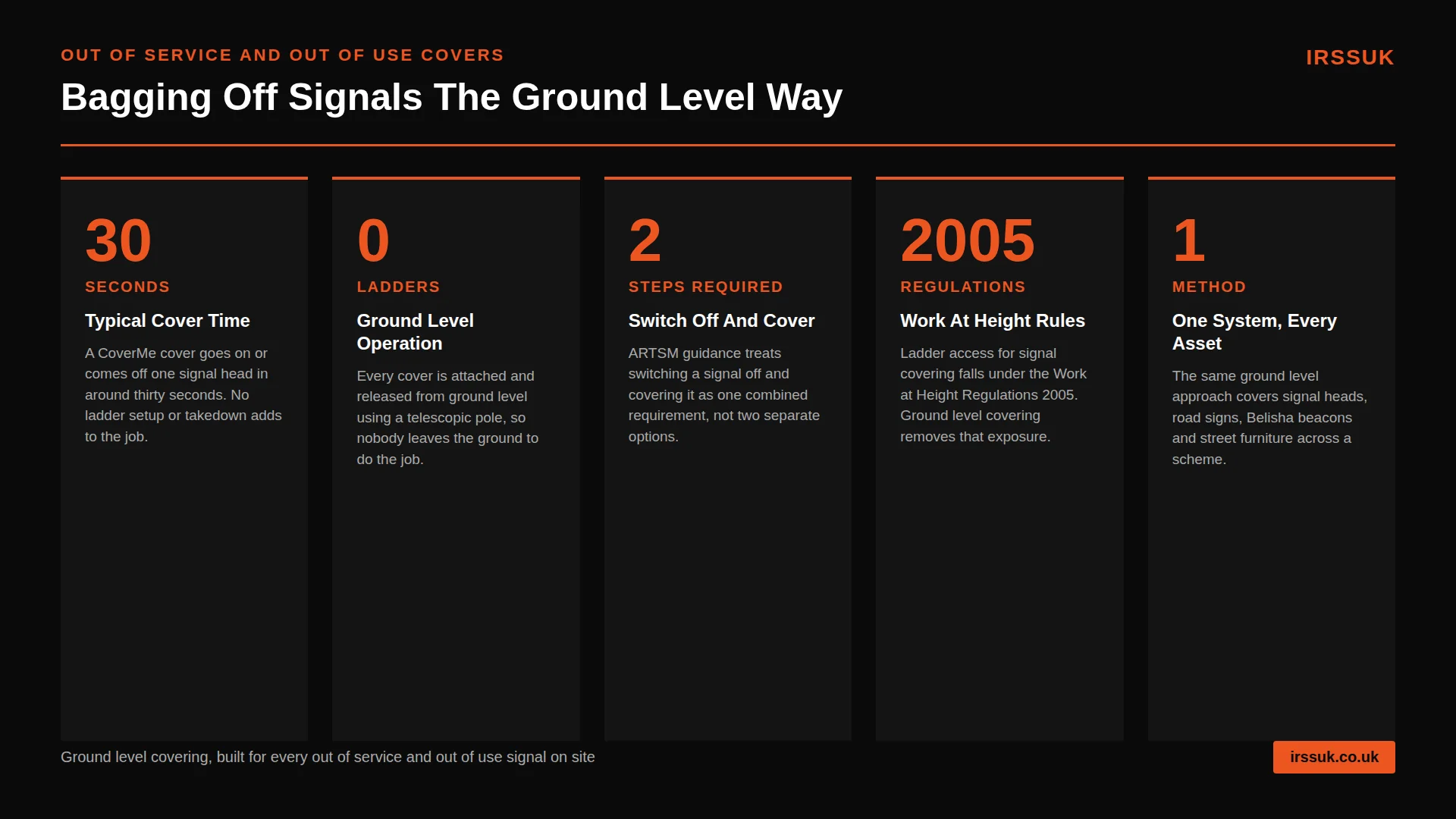
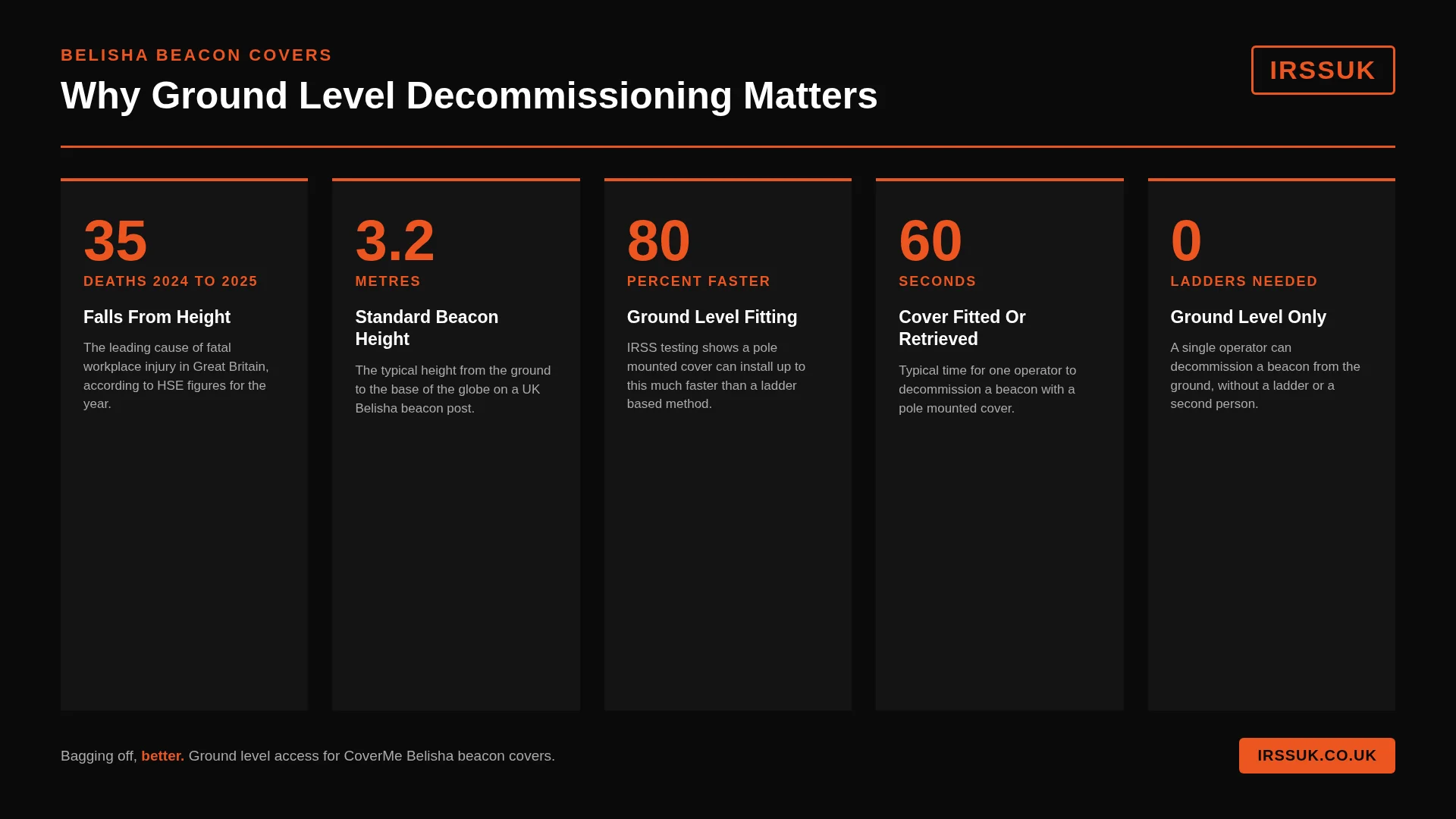
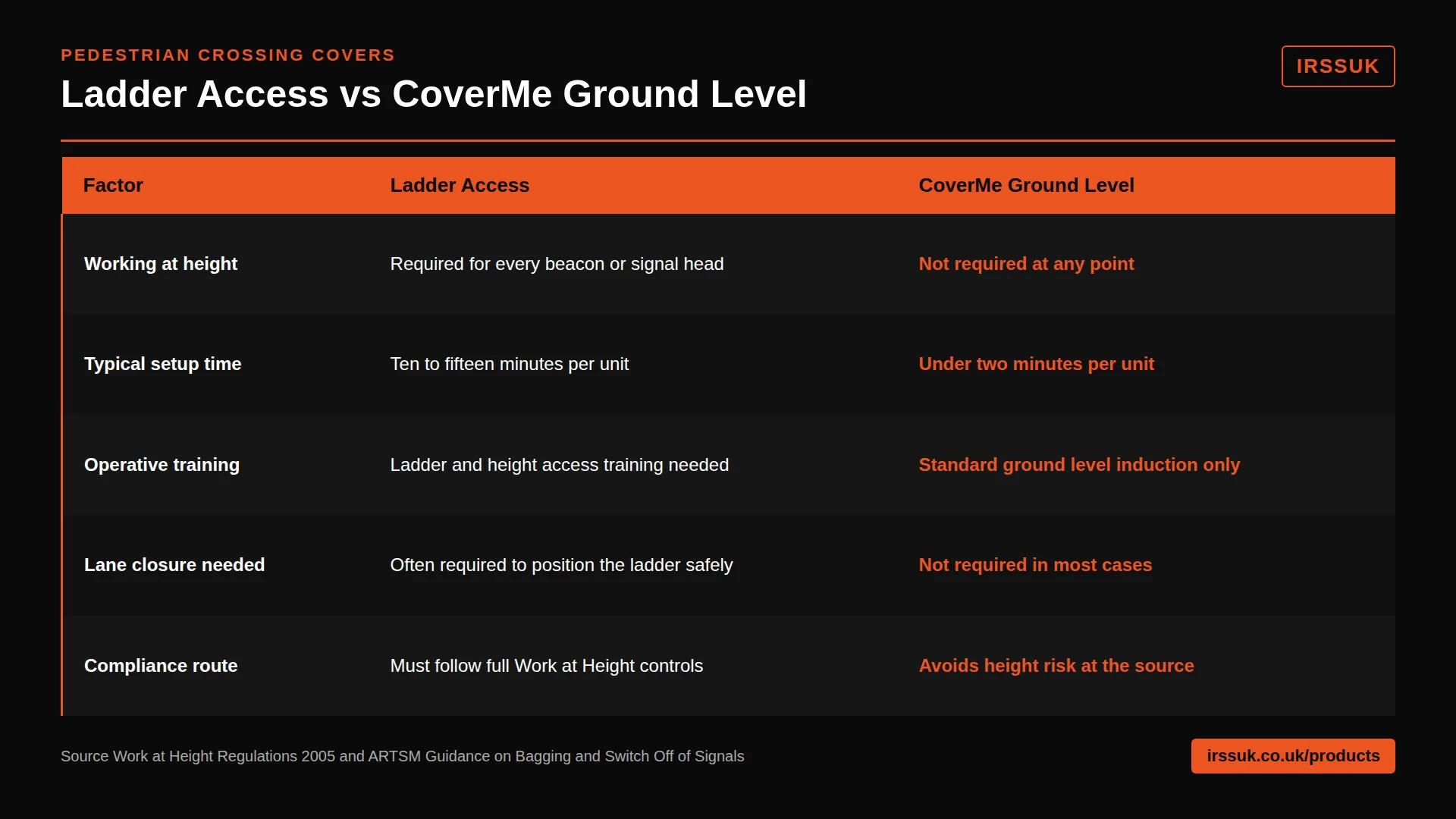
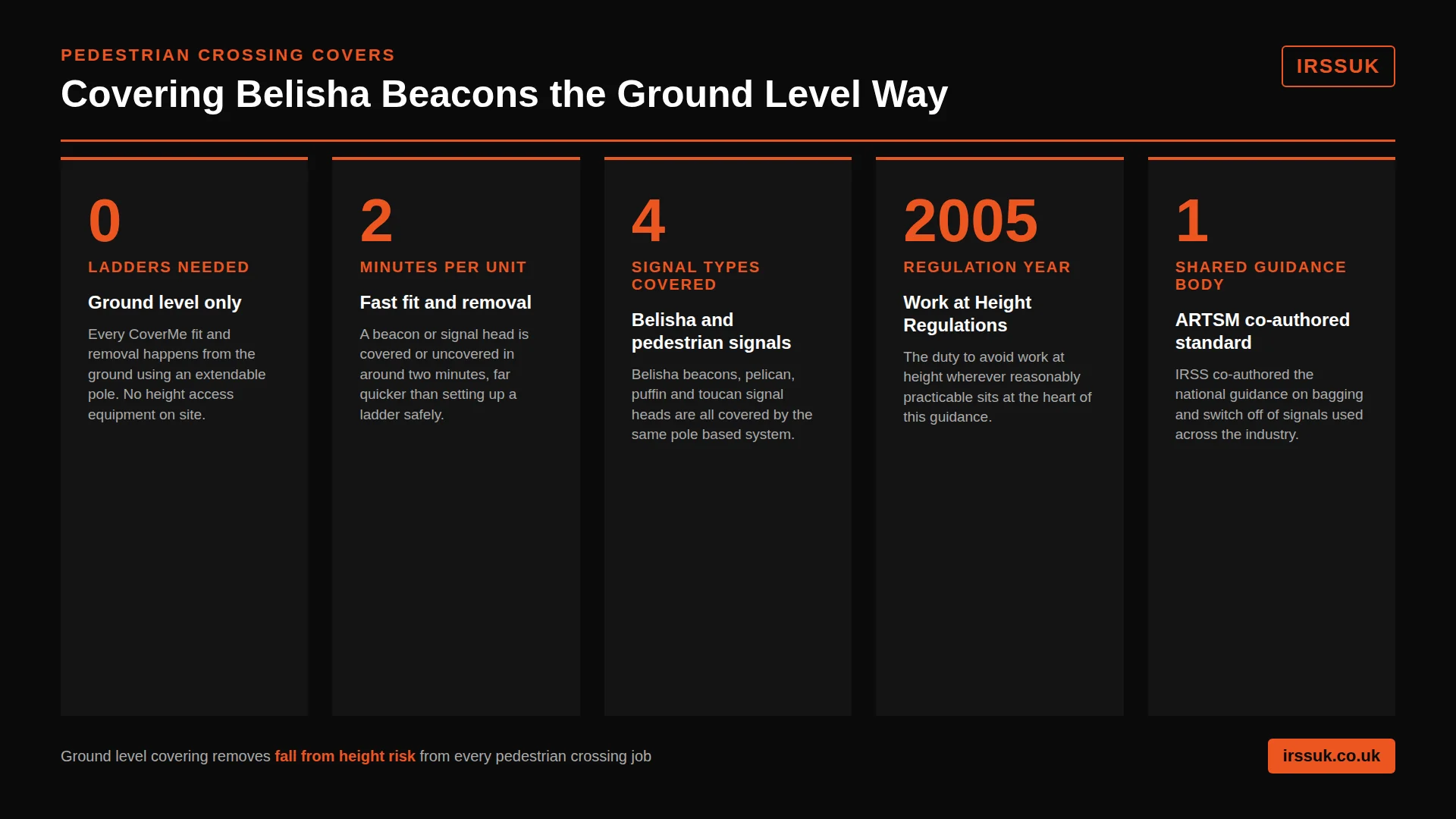
A pedestrian crossing cover is a tough, high-visibility bag or sleeve fitted directly over a Belisha beacon globe or signal head so it cannot be mistaken for an active signal. Covering is required whenever a crossing is taken out of use for carriageway works, utility works, or permanent removal, and it must happen before the crossing is switched off, not after. The cover has to be opaque, weatherproof, and secure enough that wind or passing traffic cannot dislodge it. CoverMe's ground-level bagging system reaches beacons and signal heads using an extendable pole, so operatives never need a ladder or a road closure to fit or remove a cover, cutting setup time and removing the single biggest injury risk on this kind of job, working at height.
UK Regulations and Standards Context
Covering signals during works sits squarely under the Work at Height Regulations 2005, which require employers to avoid work at height wherever it is reasonably practicable to do so. A ladder-free, ground-level covering method is the direct practical answer to that duty, not just a convenience. Industry best practice is set out in ARTSM's Guidance on Bagging and Switch Off of Signals, which IRSS co-authored, and which specifies how and when pedestrian signal equipment should be bagged, when it can simply be switched off, and how to sequence the works safely. Chapter 8 of the Traffic Signs Manual governs the wider temporary traffic management setup around the crossing, including signing and guarding while the beacon or signal head is covered.
Practical Application: How CoverMe Works on a Pedestrian Crossing
On a typical job, the crew arrives, sets up temporary traffic management per Chapter 8, then fits the CoverMe bag over each Belisha beacon globe or pedestrian signal head using the ground-level pole system, with no ladder and no need to isolate traffic lanes just to reach the unit. Each cover is high-visibility and clearly marked so road users and pedestrians immediately understand the crossing is out of use. When works finish, the same pole system removes the cover in seconds, and the crossing can be switched back on straight away. For a real-world example, see our Hatton Belisha beacon covers case study, where this exact method was used to keep a crossing safely out of use throughout a scheme without a single ladder access.
Common Questions
Why do Belisha beacons need to be covered when a crossing is out of use?
An uncovered beacon that isn't flashing can still look functional to a driver at a glance, especially at night. Covering it removes any ambiguity and meets the duty to make a de-activated crossing clearly identifiable as closed.
Can you cover a pedestrian signal head without a ladder?
Yes. CoverMe's pole-based system fits and removes covers on Belisha beacons, pelican, puffin and toucan signal heads entirely from ground level, which is why it's increasingly specified ahead of ladder access on live highway sites.
What's the difference between switching off and bagging a crossing?
Switching off stops the signal operating; bagging physically covers it so it's unmistakably out of use. ARTSM guidance sets out which situations call for one, the other, or both together.
Is bagging off a legal requirement or just best practice?
There's no single statute that says you must bag this beacon, but the combination of the Work at Height Regulations' duty to avoid height risk and the Traffic Signs Manual's requirement for clear, unambiguous signage during works means bagging is the practical way most authorities and contractors meet both duties at once.
Why It Matters
Getting this wrong carries two separate risks: a fall from height during a routine beacon cover, and a collision caused by a driver misreading an uncovered, de-activated crossing. Both are avoidable with the right equipment and the right sequence of work. As IRSS founder Peter Hoban has set out in industry interviews on road safety innovation, the case for ground-level covering isn't just convenience, it's removing an entirely unnecessary category of risk from everyday highway works.
In Summary
Covering Belisha beacons and pedestrian signal heads during roadworks protects both operatives and the public: operatives from fall-from-height risk, and pedestrians and drivers from an ambiguous, uncovered dead signal. A ground-level, ladder-free system like CoverMe meets the Work at Height Regulations' duty to avoid height risk and aligns with ARTSM and Chapter 8 guidance. See the CoverMe Belisha beacon covers range or get in touch to discuss your next scheme.