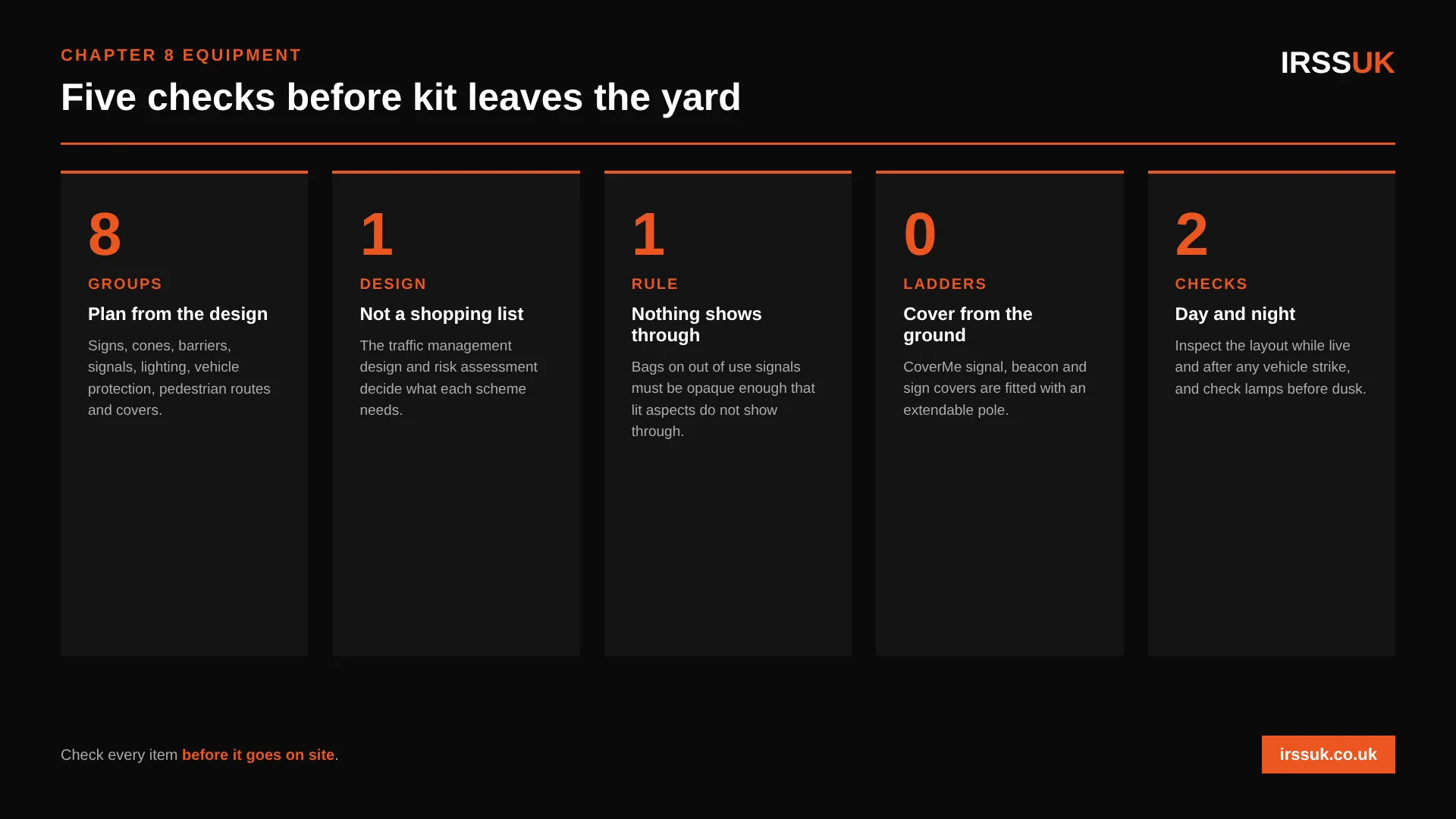
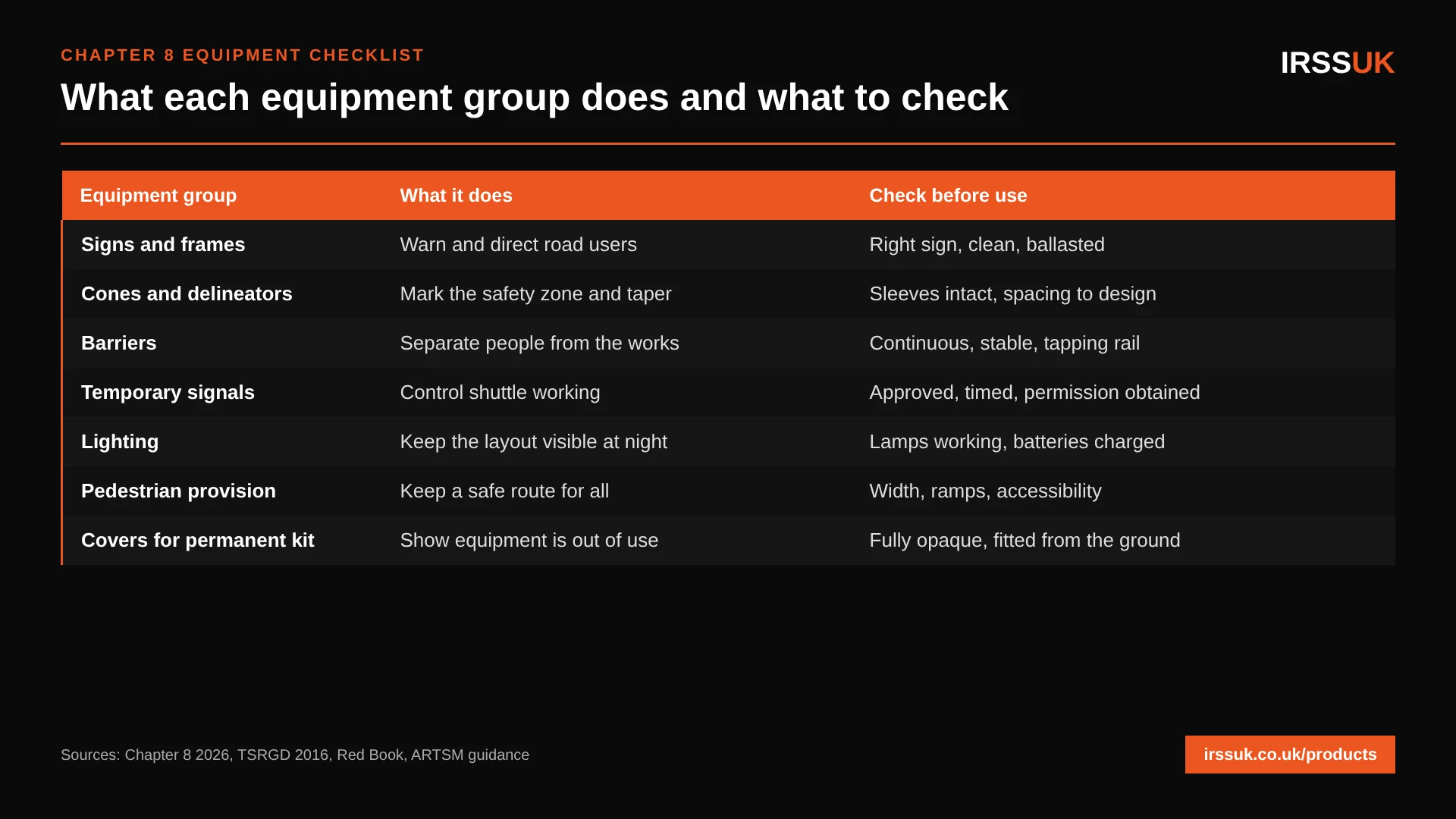
Chapter 8 traffic management equipment falls into eight groups: signs, cones and delineators, barriers, temporary traffic signals, lighting, vehicle protection, pedestrian provision, and covers for permanent equipment that is out of use. Which items a scheme needs comes from its traffic management design and risk assessment, not a fixed shopping list.
This checklist is for contractors, utilities, councils and site managers planning or buying temporary traffic management equipment. IRSS UK, co-authors of the ARTSM guidance on bagging and switch off of signals, sets out what each group is for and what to check before it goes on site.
Last reviewed: November 2026
Important: Chapter 8 is a code of practice that supports legal compliance. It is not a substitute for an approved traffic management design, a site-specific risk assessment, or trained and competent operatives.
The Chapter 8 Equipment Checklist at a Glance
Signs and Sign Frames
Signs tell drivers what is ahead and what to do. They are the first thing a driver sees.
Use signs prescribed by the Traffic Signs Regulations and General Directions 2016, in the sizes and positions the traffic management design requires.
- Check each sign is the right one for the layout, not just the nearest one in the van.
- Keep faces clean and reflective. A dirty sign at night is a missing sign.
- Ballast frames so they stay put in wind and vehicle draught.
- Cover or remove permanent signs that conflict with the temporary layout.
Cones, Cylinders and Delineators
Cones mark the edge of the safety zone and form the lead-in taper. In practice, they take more knocks than anything else on site.
- Check reflective sleeves are intact and clean.
- Set spacing to the design, especially in the taper.
- Replace damaged cones rather than standing them back up.
- Inspect the layout regularly and after any vehicle strike.
Barriers and Pedestrian Protection
Barriers keep people out of the works. For footway works, they protect pedestrians, including people with visual impairments.
The Safety at Street Works and Road Works code of practice (the Red Book) sets out pedestrian barrier requirements, including a tapping rail that a cane user can detect.
- Keep barriers continuous with no gaps at corners.
- Make sure feet and joints are stable.
- Keep the walking route clear of trip hazards.
Temporary Traffic Signals
Portable signals control shuttle working where the road is narrowed. They need permission from the highway authority and correct set-up.
- Confirm the signals are approved for use and maintained.
- Set timings to the traffic flow and check them at peak times.
- Where portable signals run near permanent signals, the permanent signals should be switched off and covered. Read our guide to traffic signal covers and blanking regulations.
Lighting and Visibility
A layout that works by day can disappear at night.
- Fit lamps where the design requires them, and check they work before dusk.
- Keep batteries charged and carry spares.
- Check that signs and sleeves are clean enough to reflect headlights.
Vehicle Protection
On higher-speed roads, operatives may need protection from errant vehicles. Requirements vary by road type and client.
- Confirm the client's specification before mobilising.
- Check vehicles are maintained and their warning lights and markings are clean.
Pedestrian Provision
Every closure must keep a safe route for people walking, using wheelchairs or pushing buggies.
- Plan the alternative route and walk it before the closure.
- Provide ramps where kerbs would block wheelchair users.
- Where a pedestrian crossing is affected, agree arrangements with the highway authority. Our guide to pedestrian crossing covers explains the covering side.
Covers for Permanent Equipment That Is Out of Use
This is the item most checklists miss. When permanent traffic signals, Belisha beacons or regulatory signs are out of use, they must not mislead road users. Signal equipment not in use should be bagged, with bags opaque enough that lit aspects don't show through.
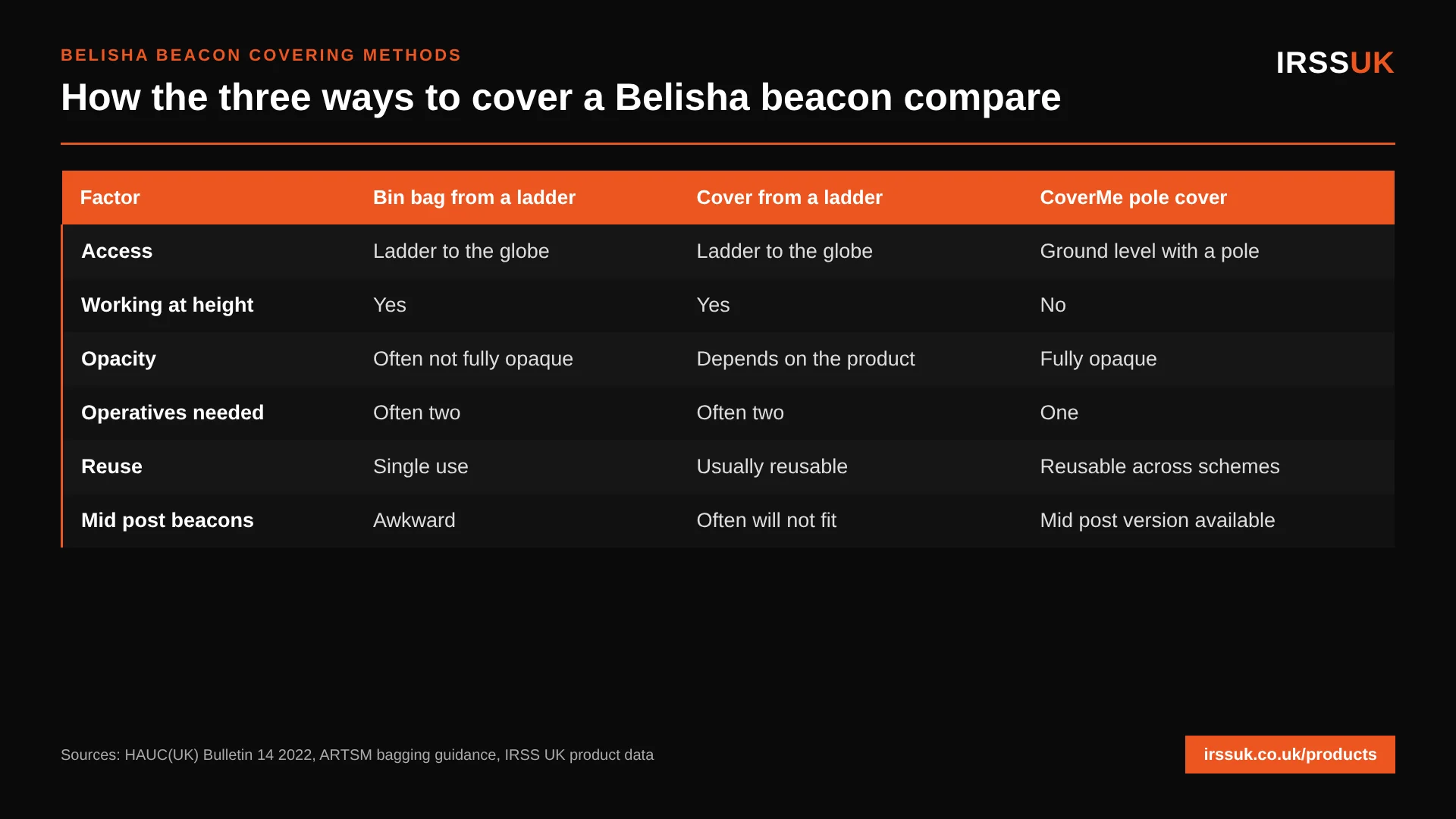
The problem is how it is usually done. Most teams still use bin bags and ladders. Bags often let light through, and ladder work puts operatives at height at a live junction.
CoverMe traffic light covers, CoverMe Belisha beacon covers and CoverMe road sign covers are fitted and removed from ground level with an extendable pole. That removes the ladder from the job. Use our calculator to see the time saved on your schemes.
Common Questions
What equipment is needed for Chapter 8 traffic management?
It depends on the traffic management design. Most schemes use signs, cones and delineators, barriers, and lighting. Some also need temporary signals, vehicle protection, pedestrian provision and covers for permanent equipment that is out of use.
Is Chapter 8 a legal requirement?
Chapter 8 is a code of practice that helps you meet legal duties. Following it shows good practice, but it does not replace an approved traffic management design or a site-specific risk assessment.
Has the equipment guidance changed in the 2026 Chapter 8?
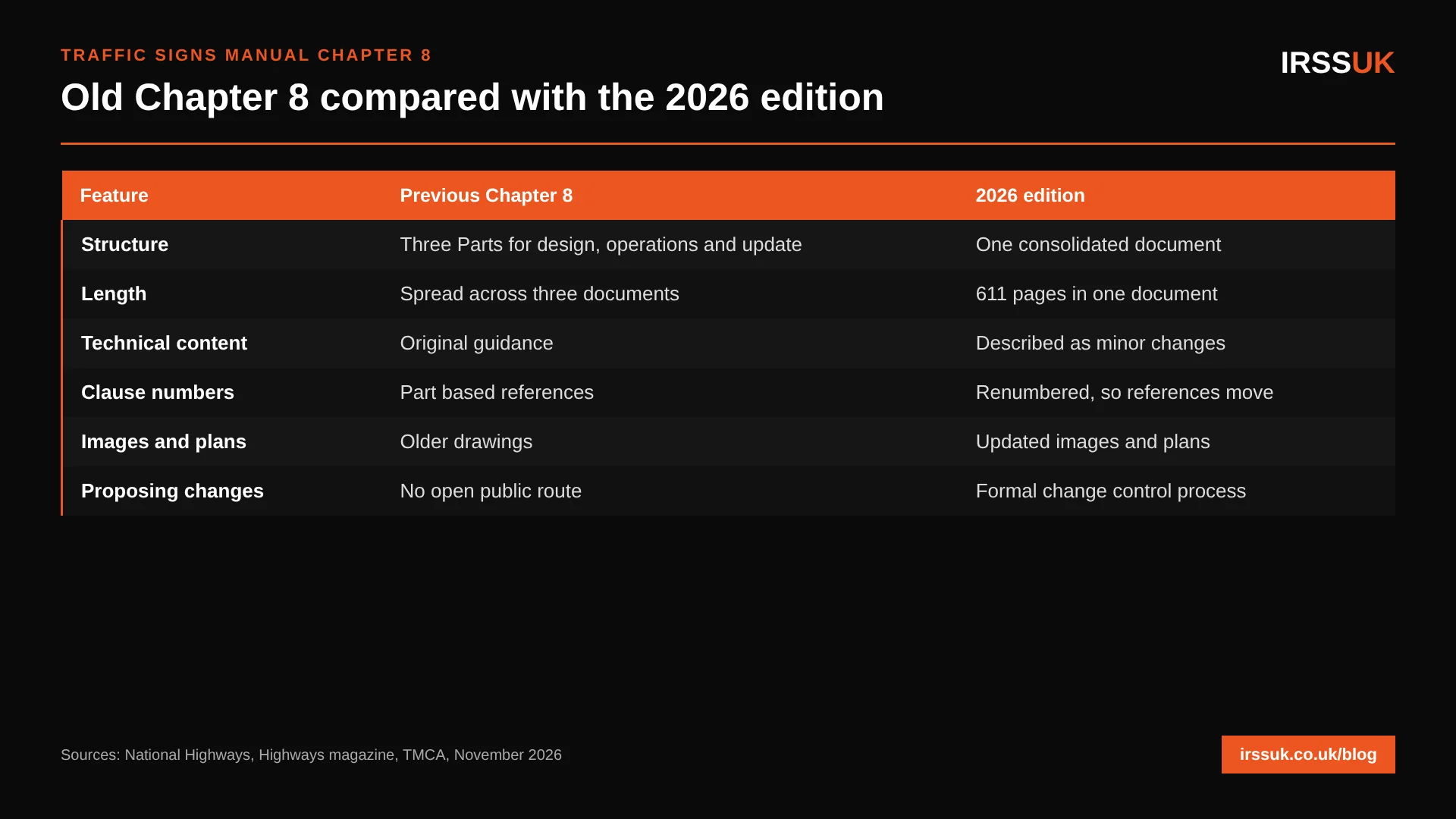
The 2026 edition is mainly an editorial rewrite that merges Parts 1, 2 and 3. Technical changes are described as minor, but clause numbers have moved. Read our guide to what has changed in Chapter 8 2026.
Do traffic lights need to be covered during roadworks?
Permanent signals that are out of use should be switched off and bagged, especially where portable signals are used nearby. Covers must be opaque enough that lit aspects do not show through.
Why Getting It Right Matters
Equipment is only safe if it is right for the layout, in good condition, and set out as designed. A missing lamp or a see-through bag can turn a compliant scheme into a hazard.
Checking kit before it leaves the yard is cheaper than fixing it on a live road. It also gives you a clear record if anything is questioned later.
The Key Takeaway
Plan equipment from the traffic management design, check every item before use, and inspect the layout while it is live. Don't forget permanent equipment that is out of use: cover it fully, and cover it from the ground.
See how CoverMe can help your team reduce risk, or speak to our team. For the latest on the guidance itself, read our Chapter 8 2026 update. For set-up speed, see the fastest way to set up traffic management equipment safely.