The 2026 edition of Traffic Signs Manual Chapter 8 was published in November 2026. It merges the old Parts 1, 2 and 3 into one 611-page document. The technical content changes are described as minor, but clause numbers have moved, so method statements, templates and training that cite the old Parts need checking now.
This guide is for traffic management contractors, street works teams and highway authorities. IRSS UK, co-authors of the ARTSM guidance on bagging and switch off of signals, explains what has changed and what to update before your next scheme.
Last reviewed: November 2026
Chapter 8 2026 at a Glance
Here's what the new edition is, in plain terms:
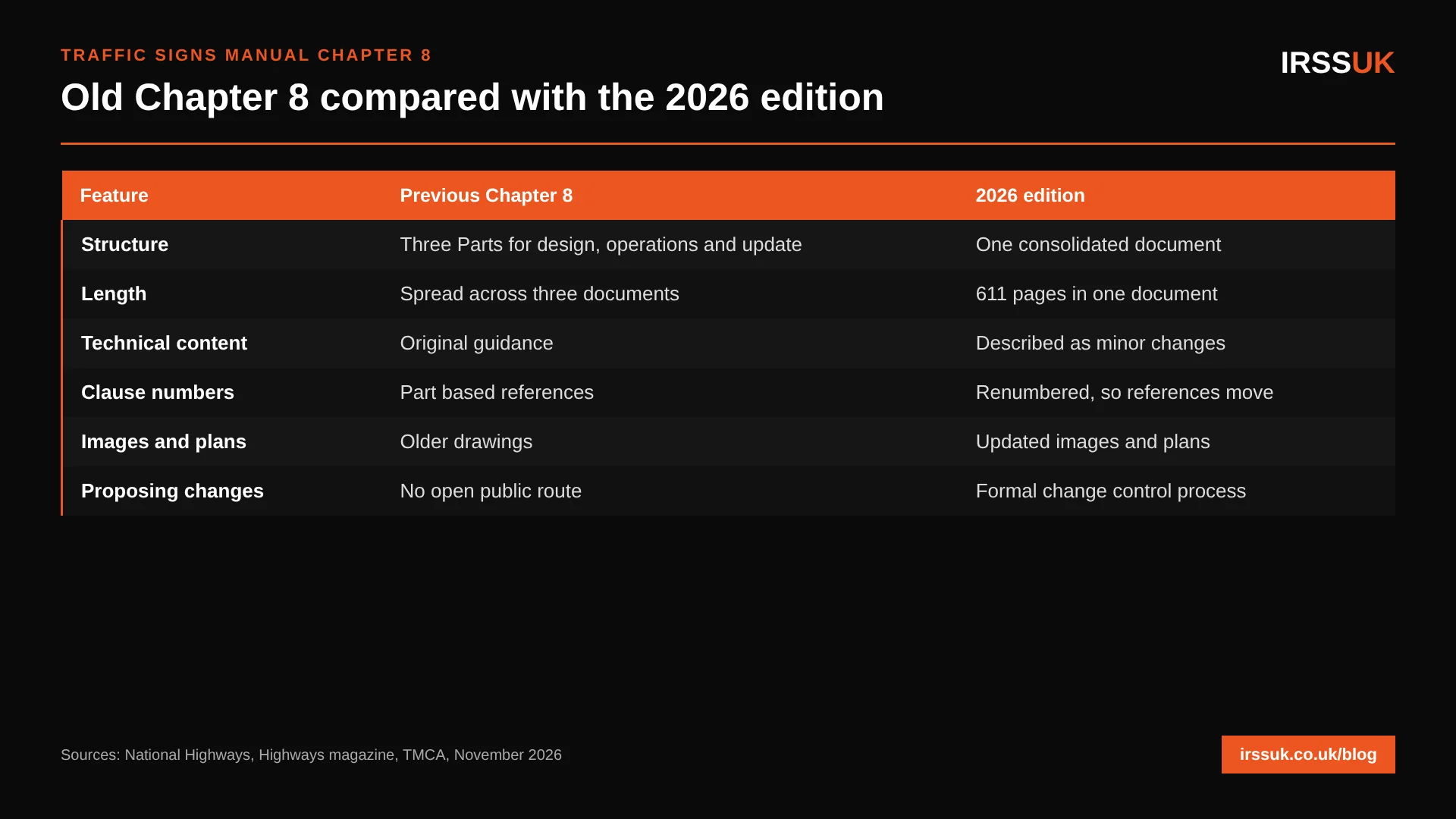
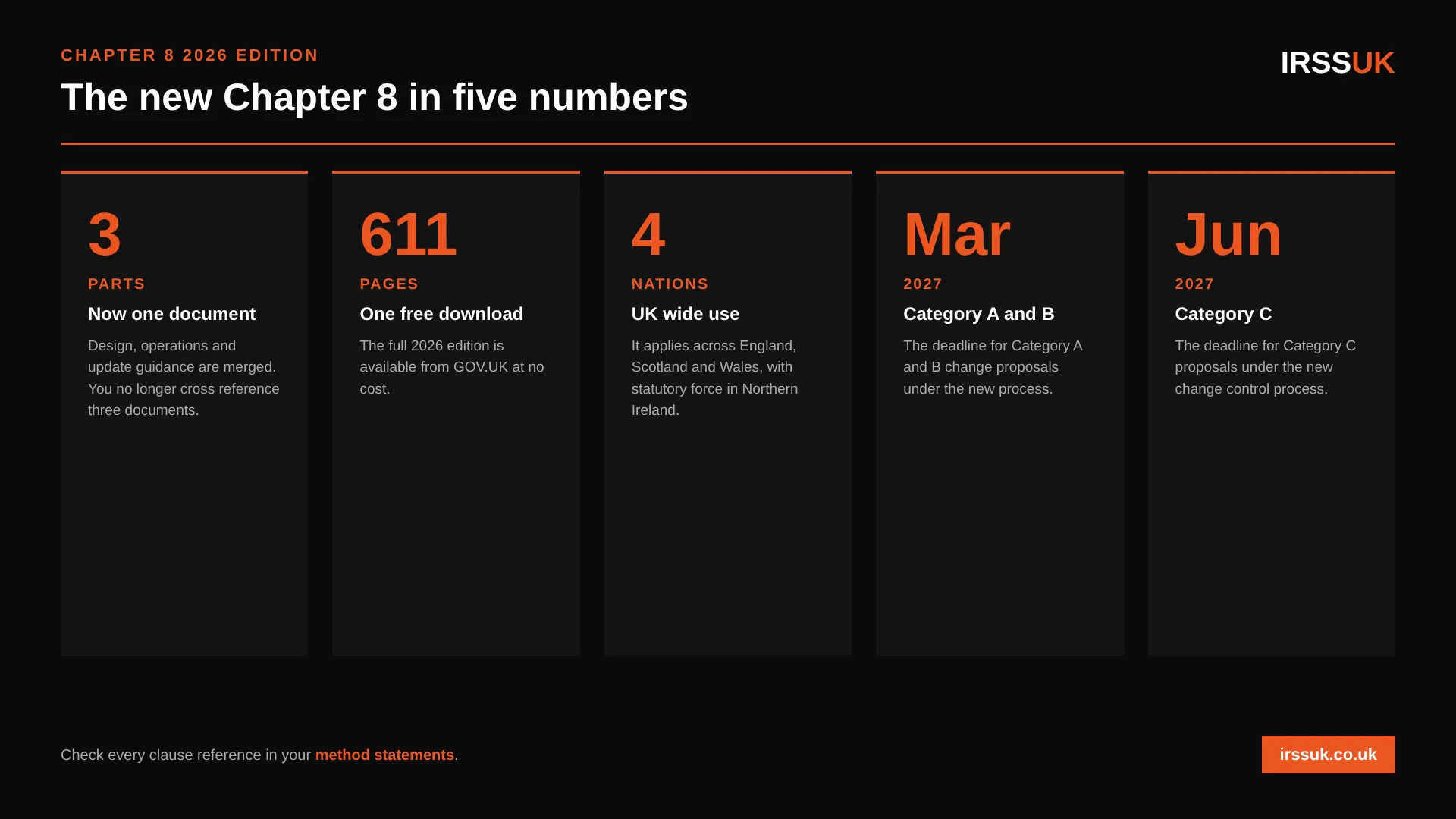
- One document, not three. The previous Part 1 (Design), Part 2 (Operations) and Part 3 (Update) are now consolidated.
- 611 pages. It is free to download from GOV.UK.
- An editorial rewrite. National Highways describes the changes as reducing duplication and overlap, with updated images and traffic management plans.
- Minor technical changes. Highways magazine reported slight tweaks to traffic management plans and clearer explanations of some legal elements.
- Same scope. Chapter 8 still covers the planning, design and implementation of temporary traffic management for road works, street works and temporary situations.
- A new way to propose changes. Anyone in the sector can now submit suggestions for the next edition.
Who Publishes Chapter 8 and Where It Applies
Chapter 8 is maintained by National Highways on behalf of the Department for Transport. It sits within the Traffic Signs Manual on GOV.UK.
It applies to roads across England, Scotland and Wales, and has statutory force in Northern Ireland. It is written for traffic authorities and their contractors, designers and managing agents.
What matters is how it is used. Chapter 8 is a code of practice that helps you meet your legal duties. It does not replace a site-specific traffic management design, a risk assessment or competent people on site.
What Has Actually Changed
The honest answer is: less than the page count suggests.
The 2026 edition is an editorial rewrite. The main changes are structural:
- Consolidation. Design and operations guidance now sit together, so you no longer cross-reference three documents.
- Less duplication. Repeated content across the old Parts has been merged.
- Updated drawings. Images and example traffic management plans have been refreshed.
- Clearer legal wording. Some legal elements have been reworded to explain them better.
The problem is the clause numbers. The Traffic Management Contractors Association (TMCA) has warned members not to assume every clause remains exactly as it was. Its technical group is comparing the new edition line by line against the old Parts.
Old Chapter 8 vs the 2026 Edition
What to Update on Your Schemes Now
Most teams still cite the old Parts in their paperwork. Here's what to check this month:
- Download the 2026 edition and make sure every team is working from it.
- Search your method statements for references to Part 1, Part 2 or Part 3, and update clause numbers.
- Check design templates and traffic management plans that quote specific clauses.
- Review training materials and toolbox talks that reference the old structure.
- Ask your clients whether contracts or work instructions name a specific version of Chapter 8.
- Keep the old Parts on file for schemes designed before the change, so you can show what applied at the time.
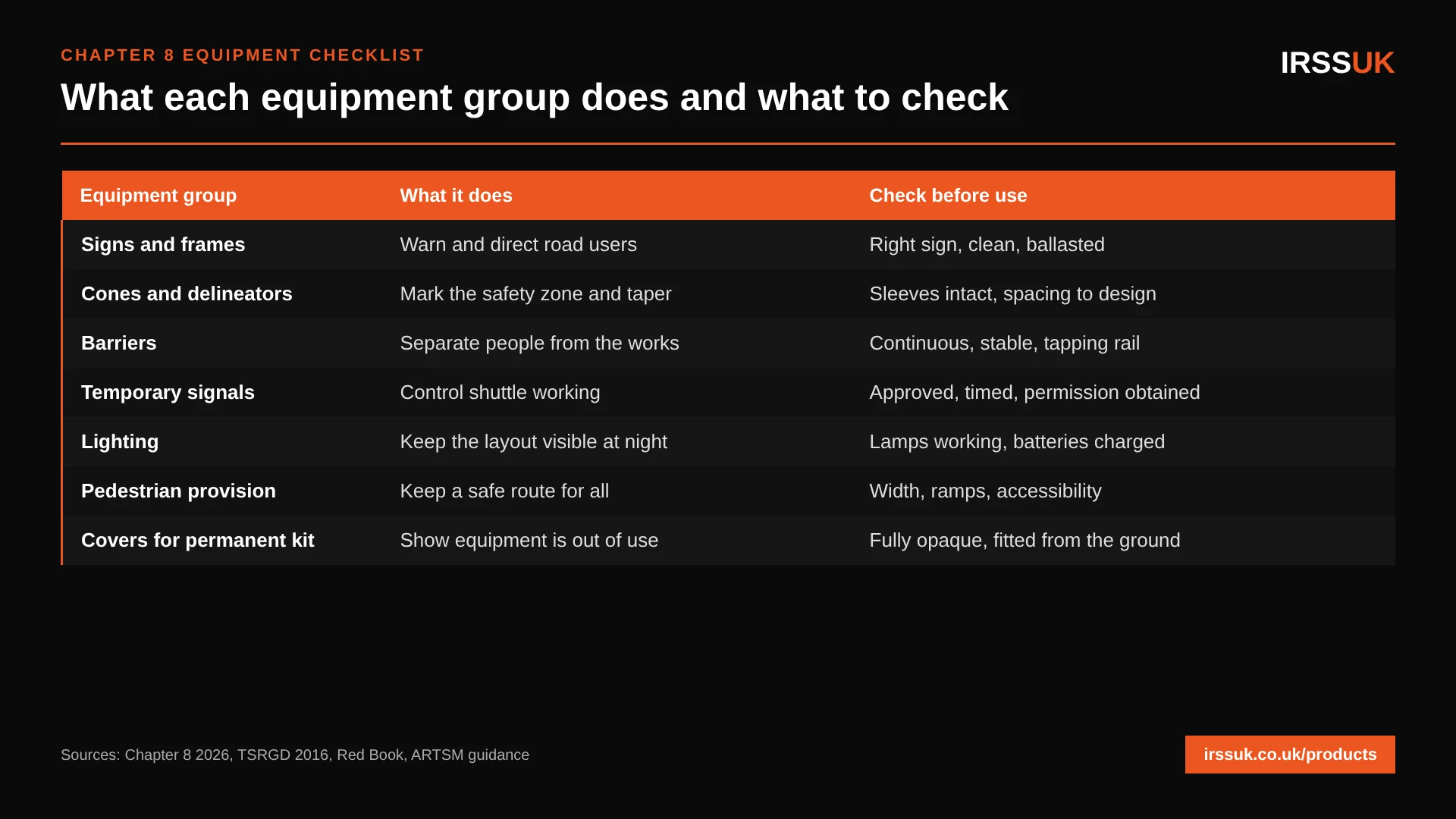
A good example is bagging off. Many method statements cite the old Part 1 clause on bagging traffic signals that are not in use. Check where that guidance now sits before your next signal closure. The ARTSM Guidance on Bagging and Switch Off of Signals still sets out the practical steps. Read our guide to traffic signal covers and blanking regulations for how the rules fit together.
How to Propose Changes to Chapter 8
For the first time, the industry has a formal route to shape the next edition. National Highways is piloting a change control process:
- Submit a short form on the National Highways Chapter 8 page.
- Review. A review panel assesses the proposal and makes a recommendation.
- Decision. A steering group of industry representatives makes the final call.
- Implementation. Approved changes go into the next published version.
National Highways lists submission deadlines of March 2027 for Category A and B changes and June 2027 for Category C changes. Highways magazine reported three types of change: typographical errors, clarity changes, and new or changed content. Read the official submission guidance before applying.
The review panel includes DfT, Transport for London, Transport Scotland, the Welsh Government, the Department for Infrastructure in Northern Ireland, National Highways, the TMCA, the Road Safety Markings Association and ARTSM.
Common Questions
When was the new Chapter 8 published?
The 2026 edition of Traffic Signs Manual Chapter 8 was published in November 2026. It replaces the previous three-part version and is free to download from GOV.UK.
Has Chapter 8 changed much in 2026?
The technical changes are described as minor. The 2026 edition is mainly an editorial rewrite that merges Parts 1, 2 and 3, reduces duplication and updates images. Clause numbers have moved, so check any document that cites them.
Are Chapter 8 Parts 1, 2 and 3 still valid?
The 2026 edition supersedes them as current guidance. Keep the old Parts on file for schemes designed before November 2026, and confirm with your client which version a contract requires.
How do I suggest a change to Chapter 8?
Use the change control form on the National Highways Chapter 8 page. Deadlines are March 2027 for Category A and B submissions and June 2027 for Category C.
Why It Matters
A method statement that cites the wrong clause is a weak document if an incident is investigated. It suggests the plan was copied, not checked.
The change control process matters too. Chapter 8 can now be updated more often, so it can keep pace with safer methods on site. Teams that track it closely will spot changes first.
The Key Takeaway
Chapter 8 (2026 edition) is one document instead of three, with minor technical changes and new clause numbers. Download it, update your references, and check your bagging-off and signal closure procedures.
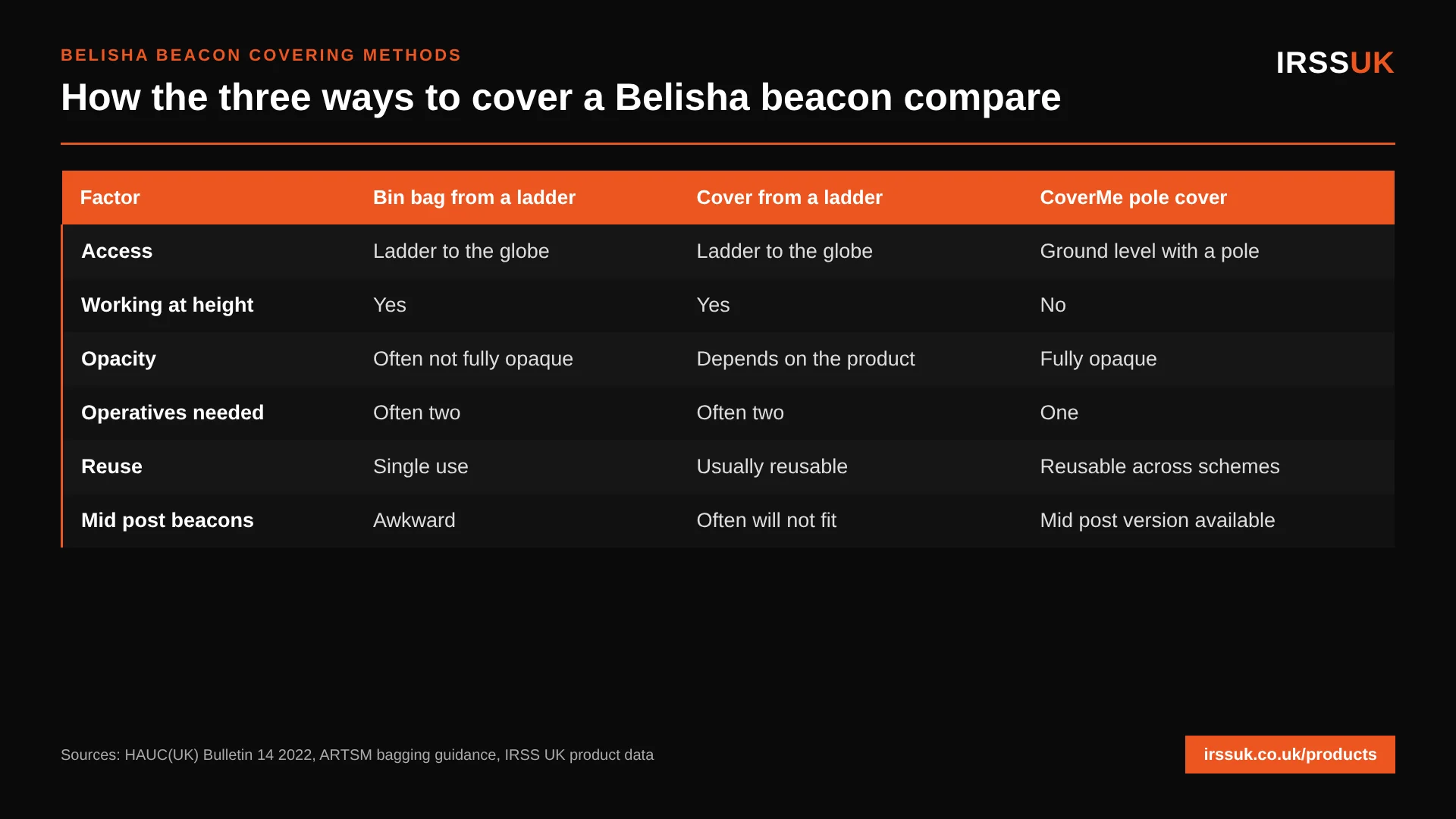
If you are reviewing how your teams cover traffic signals, Belisha beacons and road signs, see the CoverMe range or speak to our team. For the kit itself, read our Chapter 8 traffic management equipment checklist.